A Seat at the Table

*Check out the podcast version on Spotify or Anchor!

This phrase is trending hard as social, political, and racial unrest continues to challenge the status quo.

Who deserves a seat at the table? Who doesn’t? Who owns the table? Who decides who gets a seat? Can I just build my own table – with my own set of standards and conditions of merit?

Let’s cool it for a sec, and remember that actually… NO ONE deserves a seat at the table!

No one is right with God. Not. Even. One.

– Romans 3:10

Now, there’s a story in 2 Samuel about a special seat, at a special table that I really think is worth exploring.

It takes place long after David slays Goliath, and after King Saul turns on David and tries to have him killed. Our story begins after David is finally crowned king of Israel himself.

Our new king asks a question. It’s a simple question, and we may not even pay it much heed. But he asks:

“Is anyone in Saul’s family still alive—anyone to whom I can show the kindness of God for Jonathan’s sake?”

2 Samuel 9:1

I had to ask myself, why is this on his radar? Why does David feel compelled to show God’s kindness to Saul’s family? And what would that even look like?

Here’s the lowdown:

  • First of all, he wasn’t actually compelled, because…
  • It was not out of guilt or obligation.
  • And it wasn’t even about Saul at all!
  • He was committed to a covenant promise he made to his friend, Jonathan. That’s it.

In 1 Samuel 20:14-15, Jonathan had pleaded with David to promise to show his family kindness even after Jonathan passed.

So now, David’s on a mission. He is determined to keep this covenant promise to his dear friend. And even though Jonathan isn’t around to benefit from it, or even know about it, he will not be swayed.

Finally, David finds Mephibosheth, Jonathan’s son. He was crippled after a tragic childhood accident, and could no longer walk. He was in hiding out of fear of what David might do if he was discovered.

Mephibosheth was terrified of David for two reasons:

  • He was the grandson of David’s rival and enemy, King Saul
  • His very existence was a threat to David’s throne and rule

So this is not an unreasonable concern or irrational fear. Because under normal circumstances, a new king would do everything in his power to eliminate any threat to his throne as well as any remnant of a former dynasty.

Mephibosheth was absolutely both of those things.

Instead of focusing on himself and his fear, he should have focused on who David was: the rightful king, fulfilling a covenant promise to his father, Jonathan.

Because David followed God, the kindness of God that David wanted to bestow on Jonathan’s family was a direct outpouring of the kindness that he had received from God first.

So what does David do when he finds Mephibosheth?

He doesn’t kill him or exile him. He doesn’t torture him or punish him.

David responds with compassion:

He tells Mephibosheth to not be afraid.
He restores to Mephibosheth all of the land that belonged to Saul.
He gives Mephibosheth a seat at the king’s table for the rest of his days.

This meant that David didn’t just allow Mephibosheth to inherit what had previously belonged to his family…

But through David’s extravagant generosity, Mephibosheth was invited into the king’s inner circle, and he and his household were provided for, for the rest of their lives!

Let’s consider how we might relate to this story.

Do you want a seat at God’s table? Do you, like Mephibosheth, see yourself as an enemy of God?

Isaiah 30:18 says that, God is full of mercy and rises to show you compassion…. not because of righteous things you’ve done, as we find in Titus 3:5, but because of His great love.

I hate to break it to you, but we don’t deserve that seat. We just don’t.

Because of the inherent sin we possess from birth, we are disqualified from a seat at the table.

Just as Mephibosheth whose grandfather, Saul, tried to have David killed, Romans 5:10 says that we were God’s enemies.

But as David made a covenant to Jonathan, which had absolutely nothing to do with the evil in Saul’s heart… so too did God make a covenant to His people that overrides the sin in our hearts.

In addition, David’s covenant did not hinge on the actions of Jonathan’s descendants: namely, Mephibosheth who was hiding out of fear of David and his own personal shame.

So in the same way, any ongoing shortcomings we may continue to raise as a barrier between us and God, do not affect the extravagant generosity of God’s covenant and the offer of a seat at His table.

Like Mephibosheth, we need our King to rescue us. We are poor, lame, weak, and fearful. We cannot save ourselves. We desperately need the kindness of God extended to us through His hand of restoration, redemption, and forgiveness.

But let’s not settle too comfortably into the seat of the helpless victim.

For we are not just Mephibosheth in this story – an enemy of the king. If you’re like me, and you’ve recognized your own poverty and need of a Saviour, then we can’t stop the story there.

Friend, you and I are also King David in this story! And he was known as a man after God’s own heart.

David’s actions here are like the ultimate pro tip on kindness.

How can we, like David, use our influence to fulfill the covenant promise we make as believers? How can we show God’s kindness to others, inviting them to sit at His table?

Here’s a page out of David’s book:

  • Seek out those in need of God’s kindness
    This required work on David’s part! Mephibosheth didn’t run to David for saving. David sought him out, not the other way around. Let’s not assume that because there’s no one in need at our door step, that there’s no one in need at all.

The Son of Man has come to seek out and to give life to those who are lost.”

– Luke 19:10

As followers of Jesus, we’re invited to be part of that mission and do the same! Because the fields are ripe for harvest, but the workers are few. (Matthew 9:37)

  • Bless those who don’t deserve it. Even our enemies.
    Ok, enemies is a strong word, and maybe you look around and don’t notice any. But surely you know people who rub you the wrong way… with whom you strongly disagree… whose lifestyle or life choices is perplexing to you at best.

    Mephibosheth was an enemy and a threat to David’s throne, but David’s relationship with Mephibosheth’s father, Jonathan meant more to David than that. And the covenant they shared was more important than any threat to David himself.

    Are we similarly committed to our own role in the covenant promises of God to show kindness to a world that needs it?

I close the best way I know how. By quoting a different Saul – who turned Paul, from Romans 12:9-21:

What’s in the Ears

In reflection… do you feel yourself unworthy of a seat at the King’s table? Mephibosheth certainly did! In fact, in verse 8 he asked David why he’d concern himself with a dead dog such has himself? Those are strong words!

Although we are undeserving, God has sought us out and offers us a seat at His table through His Son, Jesus. In gratitude of the kindness God has shown us, let’s consider how we may show the kindness of God to others in turn.

Have you got any thoughts on this you’d like to share? Send me a message or comment below!

*Check out the podcast version on Spotify or Anchor!

Youth Ministry, We Bid You Adieu

A pastor wife’s farewell to 13 years of youth ministry

*Click HERE for the podcast on Spotify; or HERE on the Anchor app!

It was the summer of 2008 when my family embarked on our first and only trip to Greece (so far). My husband, Xavier, was still my boyfriend at the time, and leaving him behind for three weeks was the longest we had ever been apart.

I set off for the motherland with my parents, two brothers, and countless calling cards. Travelling internationally in 2008 meant unlikely access to unreliable internet and no smart phones for us to keep in touch.

Me + my two brothers in Athens

So international calling cards, Greek island pay phones, and a 7-hour time difference was the only recipe we had for successful connection during my stay in Greece.

I know what you’re thinking, and yes, we were as cool as we looked.

Greece was, as you’d expect, an absolute dream.

We spent two weeks on the home island of my Destounis family – my dad’s side. We visited the home in which my grandfather grew up in the 1930s during Nazi occupation. His sister still lives there, and was gracious enough to feed us and show us around the olive grove that still surrounds the family home.

From the roof top overlooking the olive grove of my grandfather’s childhood home in Kefalonia. My great-aunt and her husband maintain it now.

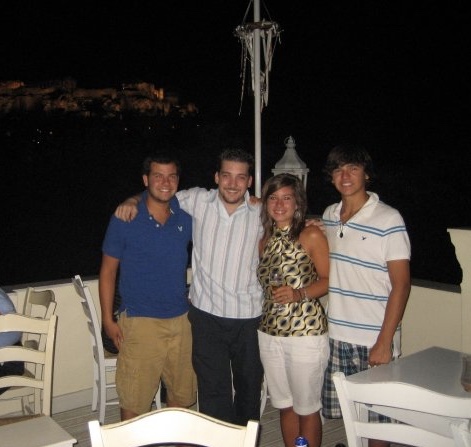
We visited cousins in Athens who took us off the beaten path of tourists and travellers to rooftop restaurants overlooking the Parthenon and other ancient landmarks, as you do when in Greece.

Rooftop bar overlooking the Parthenon. “When in Greece…”

Like I said, a freakin’ dream.

Meanwhile, back in Montreal…

My boyfriend (now husband) had been making plans to leave for Nova Scotia to enrol in a flight school there! He saved his money, had a few flying hours logged with an instructor in Montreal, and was excited to embark on this new career path.

He spent the summer as a youth intern at our church. And although he enjoyed the experience, we both felt pretty settled about his new journey to the pilot career he had always dreamt of.

One of our first youth leadership teams! Can you find us in the crowd?

When God has other plans

Between beach hopping and Greek frappé coffees, I would call my now-husband with the calling cards we had purchased for the trip. We missed each other terribly. And I wondered how in the world we’d manage being separated for months at a time when he’d go to flight school on the east coast, and I to McGill University in Montreal to complete my teaching degree.

During one of our long distance calls, Xavier shared some big news: he had been offered the permanent position of youth pastor at our church.

This came as a surprise to both of us! We needed to take some time to pray into God’s will for this ministry opportunity, and I just couldn’t believe that I was halfway across the world when this game-changer was dropped in his lap.

But the space between us was good. The time apart was critical. We were able to bring this pastoring opportunity before the Lord as individuals with clear minds, and come together – over our next long distance, muffled phone call, to discover that God had been gracious to bring us both to the same place, and on the same page… despite the thousands of miles that separated us geographically.

When a surprise open door leads to your calling

Xavier and I both felt so much peace about him accepting this role and changing our plans for the future. We were excited about this new opportunity to minister to the youth of our church. It felt so right, and we were so grateful to God for opening this door.

Xavier started the new position of Youth Pastor in the fall of 2008 and asked me to marry him shortly after. We were married in the summer of 2009, a year after my trip to Greece and the calling card phone calls that changed it all.

We celebrated 12 years of marriage this year! Which means Xavier has been a youth pastor for longer than he’s been my husband.

After 7 years of youth ministry at our home church, we had lived in two homes, had two boys, and lots of teens walk through our doors and into our hearts.

However, God was doing a new thing, and a new opportunity presented itself to our family as we stepped out in faith to a town called Leamington and a church called Meadow Brook.

Our last Sunday at Westview Bible Church in Montreal

Another open door, a new church, a new town, a new place to call “home”

We moved to Leamington six years ago when Xavier accepted a position as the Youth and Worship Pastor at Meadow Brook. There have been many highs, many lows, but God’s steadfast love and faithfulness to us unmistakably through it all.

Walking to our first youth night at MB: Baseball practice for church league baseball!

I think it’s a very good thing that God doesn’t warn us of all our hardships in advance, or we may not step into the spaces He calls us to. For those of you who follow me on social media, you might assume my highlight reel is for a journey from mountaintop to mountaintop. But no one can jump that high. Sometimes you have to go through the valley to get there. And let me tell you, there certainly have been valleys.

I’m not trying to be cryptic or overly dramatic, just honest and candid. Hardship is part of life! We all go through something that shapes us. Hopefully, it’s for the better.

The last six years of youth ministry for Xavier at Meadow Brook have been beautiful to watch.

It’s been a privilege to be in the front row of his growth in leadership and confidence. To pour into teens who are in hard situations… pointing them to Jesus, speaking truth, speaking wisdom, speaking encouragement. He does so much good behind the scenes and under the radar that only God knows. And if you know Xavier, you know that’s exactly how he likes it.

Speaking to the youth with our eldest joining in

So as we turn a corner and close our chapter of youth ministry, I’m finding it to be a bittersweet adieu. Seeing how effortlessly Xavier connects with teens and they with him… it makes my heart ache to wonder how their needs will be met going forward.

Thankfully, God knows. He’s got that covered, and we get to move on to a new thing, knowing He sees them and provides exactly what they need too.

Behind the scenes (our basement office) of recording/producing/streaming our Sundays services during Covid lockdown. He occupied this space for very many long hours over several months.

We’re not leaving ministry, we’re not even leaving our beloved church! But a new role for a man who’s proven faithful with little, and can now be trusted with more. (Luke 16:10)

Who knows, maybe we’ll even take a trip to Greece to commemorate the occasion.

Not in Greece. Still very happy.

What’s in the Ears

*Click HERE for the podcast on Spotify; or HERE on the Anchor App!

Was any part of our journey new to you? Based on what’s been shared, can you relate to anything we’ve been through? Let me know by sending me a message or comment below!

The Long and Winding Road

*Click HERE for the podcast on Spotify!

Have you ever heard a familiar story with fresh ears and been left dumbfounded at any nuances or parallels you didn’t notice before?

Sometimes I facepalm at the obvious things I’ve missed. Other times, I’m left in awe and wonder over some new revelation, thanking Jesus for yet another reason to love Him. This one was a mix of both.

I’ll make this a quick summary since most of us are at least vaguely familiar with the story of the Prodigal Son found in Luke 15.

  • A wealthy man has two sons.
  • The older son works hard to remain in the good graces of his father.
  • The younger son has had enough of playing by Dad’s rules and wants his share of the estate now, rather than after his father has passed, as was, and still is, the custom.
  • The father agrees and gives him the money.

The son bounces outta there before the door could hit him on his way out.

  • He moves far away, blows through the money as quickly as he claimed it, and winds up dirt poor.
  • He gets a job feeding pigs and comes to his senses, realizing that even his father’s hired help is better off than he is.
  • So he sets off for home with the hopes of convincing his father to let him stay as a servant.

While he was still a long way off…

This is where the story gets soooooo good, y’all! I hope you are HERE. FOR. IT!

To fully appreciate what happens next, we have to understand what was so unconventional about the father’s actions in the story.

For starters, we tend to focus on the prodigal son, understandably! His decisions, his experiences, his actions, reactions, and behaviour.

But to me, the character who raises more eyebrows and inspires the most questions is actually the father.

In The Cross and the Prodigal, Kenneth E. Bailey encourages us to recognize that in the culture of the time, the father didn’t behave as any respectable man would or should. After receiving his requested share of the inheritance, the son would have been cut off from the family. Completely dead to him.

But the father waited for his son.

How do we know this? Because in Luke 15:20, it says:

…while he was still a long way off, his father saw him coming…

The father hadn’t cut him off! He was longing for his wayward son and waiting eagerly for his return. Verse 20 continues by saying:

Filled with love and compassion, he ran to his son, embraced him, and kissed him.

Additional cultural context helps us appreciate how unusual this really was.

A man of this social standing, from this time in history simply… did. not. run.

He just didn’t!

And not for the same reasons I don’t run, ie: lazy, napping, busy eating tacos, writing this blog.

No, to run would be shameful and disgraceful. He’d have to hike up his tunic and expose his legs – no respectable man would do such a thing. It would be humiliating to be so exposed, and the embarrassment of running in addition to that would’ve been downright scandalous.

It’s also worth noting that for the father to see his son while he was still a long way off, he would’ve had to have been looking out for him down a public road where the community would also recognize him approaching.

It would’ve been commonly understood that the son was no longer welcome in their community because of his contemptuous behaviour towards the father and their customs. The son would have known this as well, which is why he’s fearful about his return and cautiously unsure about his welcome.

Keeping all this in mind…

We can see that the journey to the cross was for Jesus… what the journey to the son was for the father when the prodigal was still a long way off.

Jesus’ journey to the cross was shameful. His death? Humiliating.

And the father’s response to his son was similarly scandalous as he risked everything to meet the prodigal where he was, before condemnation could fall on him by the community of accusers.

Do you see the parallel? When the son was still a long way off…… while we were still sinners……

The father ran to meet him. He put his own robe onto his son… (I will sing and greatly rejoice in Yahweh! My whole being vibrates with shouts of joy in my God! For He has dressed me with salvation and wrapped me in the robe of His righteousness! Isaiah 61:10)

….and put his ring on him – the ring with the seal of sonship. (I will set you as a signet ring, the sign of My sovereign presence and authority. Haggai 2:23)

The shame of the son was COVERED by the righteousness of the father. Y’all, Jesus did that for us!!! While we were still sinners… a long way off.

So when our accusers surround us with condemnation, we needn’t recite our overly-rehearsed apology with long-winded explanations.

When the son began his own pigpen apology, his father interrupts him, and stars ordering servants around to get the welcome party started!

22  ‘Quick! Bring the finest robe in the house and put it on him. Get a ring for his finger and sandals for his feet. 23 And kill the calf we have been fattening. We must celebrate with a feast, 24 for this son of mine was dead and has now returned to life. He was lost, but now he is found.’ So the party began.

Meanwhile, in tragic contrast, the older son was working at home. Not being lazy or entitled, but diligently working for his reward.

Unfortunately for him, the father doesn’t honour this. So, he resents his brother and writes him off as entitled.

We may shake our heads at this brother who didn’t seem to understand the heart of his own father. Yet how often do we behave just like him?

We can see people abusing God’s grace and mercy in their own lives, condemning them in our hearts as unworthy of His love.

But the truth is that our Father doesn’t want us for what we can DO for Him!

After all, He loves each of us—good and evil, kind and cruel. He causes the sun to rise and shine on evil and good alike. He causes the rain to water the fields of the righteous and the fields of the sinner.

– Matthew 5:45

We are not responsible for our own redemption. It’s Jesus’ sacrifice on that humiliating cross that enables us to be fully restored and forgiven. There’s nothing we could say to earn it, and no amount of hard work and devotion could merit the position of sonship He offers freely.

Jesus paid it all… All to Him I owe….

Here are my main takeaways, I hope they bless you!

  • What the father did for his son was bigger than I realized…
    As was Jesus’ sacrifice for us!
  • The prodigal played a tiny role in his own restoration…
    Just draw near to the Father and recognize your need for Him!
  • The older son’s loyal work didn’t bring him into better standing with his father…
    Let’s not presume to know what God thinks of the people who are not like us, or behave like we would. Let’s not judge their journey to God.

Because ultimately, God took that journey to us.

And that long and winding road?

It led to the cross.

What’s in the Ears

I hope this familiar story has been made new to you in some way. Did you discover a new appreciation for the father? New compassion for either son? Share your thoughts in the comments, or send me a message!

*Click HERE for the podcast on Spotify!

Dead and Gone

*Audio version now available on Spotify podcast!

Full disclosure, since starting this blog, I find it hard to read the Bible without a radar on the hunt for inspo on my next topic. This is case-in-point.

So, I was going through 2 Kings when I came across the most bizarre story spanning just two verses. If you thought the Bible dragged on to make a point, don’t look to this story as your example. It’s short and sweet, and weird!

So 2 Kings 13:20-21 starts by telling us that the prophet Elisha was dead and gone.

Ok, what it actually says is, “died and was buried”. But Justin Timberlake is a whole vibe. Even from 2008.

So after this status report on Elisha, we’re told that Moabite raiders were marauding. Meaning: to go about in search of things to steal or people to attack.

Some Israelites were burying some guy when they spot this group of marauding Moabites. They panic and toss the body into the nearest hole before running away.

That hole happened to be Elisha’s tomb.

This is already weird. But then… *pause for effect* the dead body lands on Elisha’s bones and is immediately resurrected upon contact.

When the body touched Elisha’s bones, the man came alive, stood up, and walked out on his own two feet!

– 2 Kings 13:21b

And that’s the whole story! Thanks for coming to my TedTalk.

Ok not really… Besides this posthumous anecdote, here’s some background on Elisha:

  • Followed God
  • Performed many miracles
  • Lived life with integrity
  • Served God with humility
  • Prophesied boldly

Knowing this, I’m not entirely surprised that God continued to work through Elisha, even after Elisha was dead and gone. #JTReference

Well this unique situation – you know, where a dead man was casually resurrected because his body landed on the bones of a dead prophet? It got me thinking about IMPACT.

If our faith really means something to us, then it should mean something in the real world too. Otherwise, what kind of impact are we really making?

Are we leaving people better off than when we met them?

Because Elisha lived his life with integrity and in obedience to God, God continued to make his life count in the real world long after Elisha was dead and gone.

Oh how that inspires me!

The thought of making a positive impact on someone long after our paths intersect… isn’t that what it’s all about?

But this doesn’t happen with a sprinkle of wishful thinking, a dash of good intentions, a side of hope-it’ll-work-out, or your fairy godmother’s bibbidi-bobbidi-boo.

A life of integrity is a generous serving of self-sacrifice and a bottomless pitcher of laying down your life for others (John 15:13).

It’s trusting God in obedience when it doesn’t always make sense or suit us. It’s doing something for someone who can’t return the favour. When no one’s watching to praise us for it.

It’s real surrender in the trenches that produces the fruit of godly living.

Let’s consider this analogy:

Can I call myself a runner if I only think about running?

  • Perhaps I’m really passionate about my research on running.
  • Perhaps I follow runners’ blogs and Instagram accounts featuring the most popular runners.
  • Perhaps I watch races on TV and join online chats to discuss runners’ techniques and strategies.
  • Perhaps I have running gear! Sporting the latest in runners footwear and breathable apparel.
  • Perhaps I join a running club with runners who love the sport.
  • Perhaps I even adhere to a strict diet and exercise routine that is proven to help improve my running game.

But I don’t run. Ever.

Even with an interest in running, and head knowledge behind it, can I honestly call myself a runner if the soles of my shoes never hit pavement?

Similarly, can I call myself a Christian if all I do is think about the ideals I’m aspiring toward?

Run with me one lap further.

  • Perhaps I read my Bible and Christian literature about how to be a good Christian.
  • Perhaps I follow all the best blogs (like this one, duh) and Instagram accounts featuring the trendiest Christian celebrities (That term should be a red flag, btw).
  • Perhaps I watch viral sermons and listen to famous podcasts discussing techniques and strategies for Christian living.
  • Perhaps I dress like a Christian! You know, modest is best. I even have those cool shirts with subtle reference to faith.
  • Perhaps I’m involved in all things “church” and surround myself with likeminded people.
  • Perhaps I even adhere to the strict code of conduct that all Christians should! The do’s and don’ts that prove piety and devotion to God.

But I don’t submit to the Lordship of Jesus. Not really. I don’t trust Him with my life. I don’t surrender my will to His. I don’t obey God in the areas I know He’s called me to. I don’t sit in stillness to hear from Him. When I pray, I just talk at Him…

Oh, and I don’t love people. Not really. I don’t serve my community. I don’t love my neighbour (definitely not my enemy). I don’t pray for those who hate me. I don’t show compassion to those who disagree with me. In fact, I don’t give much thought to those around me at all…

Can I really call myself a Christian, then?

Jesus made it super simple for us. All the law and prophets can be summed up in this:

Love God. Love your neighbour (Matthew 22:36-40).

Here are some simple scenarios to illustrate this point:

“You were the only person who noticed me in school.”
“Thank you for checking on me, even if you don’t know what to say.”
“Your gift helped us get through an impossible financial crisis.”
“Thank you for being kind, even if you don’t agree or understand.”

I am the sprouting vine and you’re my branches. As you live in union with Me as your source, fruitfulness will stream from within you—but when you live separated from Me you are powerless.

– John 15:5 TPT

My prayer is that Elisha’s story would stir in us a desire for the type of impact that’s so life-giving, people actually come alive because of God in us.

A word of caution:

  • We believe lies if we think we can do any good without the life-giving power of God at work in us.
  • We ALSO believe lies, if we think a small act of kindness isn’t worth doing unless it’s moving mountains or calling down fire from heaven.

Since Jesus Himself compared the Kingdom of Heaven to tiny seeds and buried treasure… let’s not forget how significant the small and hidden things can be!

The enemy of our souls would have us believe a text to encourage a friend, or a smile for a stranger isn’t doing enough. So we end up doing nothing! Let’s remember that some of the most life-changing work of the Spirit has been in the grassroots, not the flashy stage.

Of course, there’s also hard work and sacrifice – you don’t live a life of integrity and obedience by watching runners go by!

Remaining connected to God, our Source, and obeying Him through little things? That’s a sure way to make a lasting impact… long after we’re dead and gone.

So let’s not get tired of doing what is good. At just the right time we will reap a harvest of blessing if we don’t give up!

– Galatians 6:9

What’s in the Ears

This song is a reference to Ezekiel, not Elisha, but it’s still super good.

Were you familiar with this story about Elisha? Does it inspire you to reflect on the impact you’re making? Share your thoughts in the comments or send me a message!

*Audio version now available on Spotify podcast!

Tree Planting

My paternal grandfather is 90 years young as I write this. He’s been through a lot, as is expected at that age. But he’s tough as nails, and has hardly slowed down. He and my grandmother live in their 3-bedroom home, and still maintain it impeccably, inside and out.

Taken at my grandparents’ home on last time I saw them, December 2019.

From the generation that lived through World War II, followed by mass emigration from Europe to North America, my grandparents faced all the ups and downs that come with post-war immigrant life.

The pair only met on this side of the pond as fate would have it (or God’s will?), when they found employment at the same little bakery in downtown Montreal’s Park Extension.

Engagement photo, 1957

They fell in love, got married, had a couple of kids, started a couple of businesses, and unfortunately lived through more tragedy than any parent should when their second son took his life as a teenager, leaving my own dad as an only child.

The years that followed were met with their own type of adversity since Greek-speaking grief counselling services weren’t exactly in abundant supply in Montreal in the 1970s.

Fast forward 40+ years…

…and my grandfather is in the twilight of his life. Because of Covid and a 10-hour drive between us, I haven’t seen him as often as I would like in recent years. But I’m told he’s in a very reflective state as of late.

He’s pondering life’s deep questions… Tying up loose ends of material possessions and family heirlooms… I guess you’d call that getting his affairs in order.

So what does all this have to do with our post titled, Tree Planting?

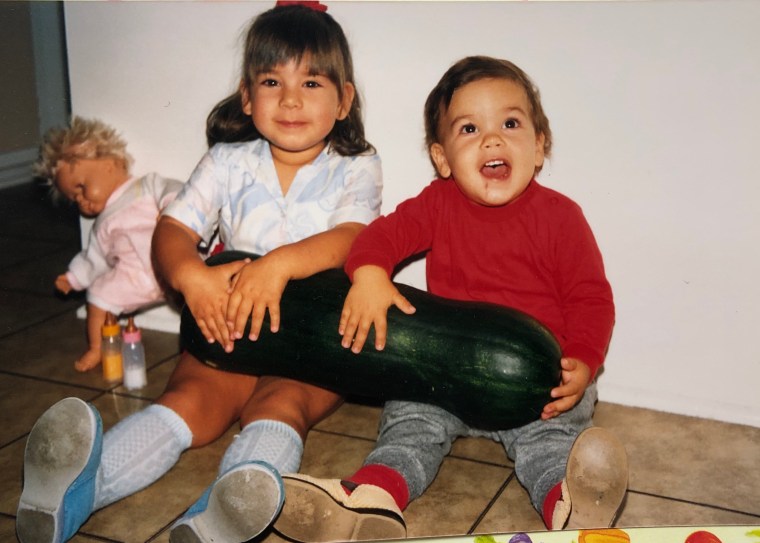
Me with my brother, grandfather, and a zucchini so big it’d probably win a prize at a country fair.

Well for as long as I can remember, my grandfather’s garden has been his pride and joy. In the spring, summer, and autumn months, he spends his days outdoors cultivating, pruning, tilling, grafting, nurturing, and harvesting a wide variety of produce.

Besides the more common cukes and tomatoes that are grown in this corner of the world, my grandfather – having the greenest of green thumbs – has successfully grown produce thought to be too exotic to survive Montreal’s climate.

Just a couple of Greek kids and a child-size zucchini .

Growing up, my family was always the happy recipient of the fruit of my grandfather’s labour.

Literal fruit, like cherries from his cherry tree, peaches from his peach tree, as well as lemons and limes, plums and apricots, which my own children have also enjoyed.

His secret? The man starts planting indoors where the temperature can be regulated and the roots strengthened. Once the tree is strong enough to be transplanted outdoors, he attentively waters and prunes it during the warm months.

When the temperatures start to drop, he literally digs up half of the tree and buries it into the ground as a way to hibernate through the subzero temperatures of Montreal’s harsh winters.

I personally find this to be absolutely WILD. Even before the days of Google, he was never much of a reader. He never finished elementary school (no thanks to the Nazi invasion of his Greek island home, Kefalonia), so I really can’t imagine any scenario where he would have researched this!

So if you’re looking for the secret to tropical fruit growth – look no further!

My boys and their great-grandparents with the dining room lemon tree.

To Never Enjoy the Fruit of Your Labour

As I mentioned, I haven’t seen my grandparents since before Covid. But even through all the hardship that this past year (and now over a year!) has delivered at his age, my grandfather has this crazy notion that he’s going to plant yet another fruit tree.

  • At 90 years old
  • Whilst juggling several health problems and complications
  • Limited mobility
  • Chronic pain
  • Harsh climate
  • Did I mention 90 years old?

The man has decided to plant another fruit tree.

Folks, I tell you this because it was the life lesson that felt like the ultimately wake up call to me. If we were sitting (masked)face to (masked)face at a safe 6 ft apart just visiting and sharing life, I’d be waving my arms around like the dramatic Greek I am and shouting this next part…

All CAPS will have to do:

HE WILL NEVER EAT FRUIT FROM THIS TREE.
HE WILL NEVER SIT UNDER ITS BRANCHES, NOR WILL HE ENJOY THE SHADE OF ITS LEAVES.

He’s planting this tree for whoever will live in his home next. For the future owners of his home. For the next generation. Without any payback, reward, or personal gain.

I didn’t know this when I first started working on this post, but there’s actually an old Greek proverb that says:

This post isn’t overly spiritual or biblical, but I think there’s a lot to be learnt from regular life and experiences too.

What if we all approached life this way? What if we made life decisions that didn’t necessarily have a direct positive impact on our own wellbeing? What if we just did something for someone else without expecting something in return?

To be clear, I’m very much NOT good at this. Look at this post as a way to keep me accountable since I’m putting it out there and you’re actually reading it now and there’s no turning back.

We’re just not naturally inclined to do something for others that doesn’t benefit us in return.

In the wise words of Joey Tribbiani:

When I reach the twilight of my own life, I want to be known for that too! For the selfless good deeds. For inexplicable kindness. For generosity that defies logic. For planting trees I’ll never get to rest under.

What about you?

There’s lots to work on, and I have a ways to go. But let’s not stay in the condemnation of all the things we’re not getting right, or the goals we fall short of.

As a final thought:

(because I love my Bible)

The Apostle Paul shared some inspiring closing remarks to his young protégé, Timothy, a young up-and-comer in faith and church leadership.

In this letter, Paul encourages Timothy to continue in what he had learnt from his mother and grandmother (since family legacy is important!). He then ends with a reminder that the wisdom of his matriarchs is based on the Word of God!

Because…

All Scripture is inspired by God and is useful to teach us what is true and to make us realize what is wrong in our lives. It corrects us when we are wrong and teaches us to do what is right. 17 God uses it to prepare and equip his people to do every good work.

– II Timothy 3:16-17

The balance of this important reminder really resonated with me. We can be inspired by those around us doing a good work…

Example: don’t even get me started on my grandmother! She’s the most selfless, servant-hearted person I’ve ever met.

But we anchor it ALL to the inspiring words of scripture that God uses to prepare and equip His people to actually DO the good!

One last photo because look how happy they are! (Taken 2 years ago – one of my last Montreal visits, May 2019.)

What’s in the Ears

This song is about prayer, but it’s also about the legacy of faith we inherit from loved ones, and pass on to others. It always moves me to tears. Here are the lyrics!

Thanks for reading along today! Writing about my grandfather was emotional but special too. So I’d love to hear your own inspiring or special family stories! Send me a message or comment below!

First Impressions

They can be a lot of pressure! What comes to mind, is an opportunity my husband and I had six years ago to make a good first impression with potentially life-changing results.

We had been interviewing at various churches across North America in search of a new ministry opportunity. When one church in Southern Ontario invited us for a two-day visit including a formal interview and to meet some church leaders and the staff.

Quaint Windsor airport. Heading back to Montreal after our interview!

I remember the anticipation leading up to the interview as we took time to prepare, dream, pray, and freak out! Ok fine, I probably did the freaking out. My husband was calm, cool, and ready. Which is a good thing too, because he was doing 99% of the interview.

Besides the anticipated interview questions, I couldn’t help but consider how I might be perceived.

I knew all about that stereotype of a pastor wife vibe. I also knew I didn’t check all the boxes.

  • Love Jesus ✔️ (but I’m not great at trusting and obeying Him)
  • Love others ✔️ (but reeeeeeeally not as well I should)
  • Read my Bible ✔️ (but I find parts of it boring… yes, even me, the one obsessed with the Scriptures)
  • Pray everyday ✔️ (do drowsy bedtime prayers count?)
  • Listen exclusively to worship music (yeah, no… please don’t ask for my Spotify history)
  • Never cuss (define never…. damn it! What is this, the Spanish Inquisition?)
  • Passion for children and youth (umm sorry husband, you might not get the job and it’s all my fault)

It was so stressful to think about what kind of first impression I’d be giving during those first encounters.

Well, spoiler alert: I didn’t blow it. My husband landed the gig! And it was 6 years ago this past week, since that whirlwind weekend of first impressions.

Why are first impressions such a big deal? What is it about being asked to describe ourselves that makes us want to run for the hills instead?

Whether it’s:

  • a blind date
  • job interview
  • first day of school
  • first day on the job
  • meeting the in laws
  • or a small group Bible study…

The intense pressure we feel to project the best possible version of ourselves is truly palpable.

Hi, I’m God.

I’m willing to bet He did not feel the pressure, but in the book of Exodus, we find one of the very first times God describes Himself in Scripture. How cool is that?!

Let’s check it out!

Then the Lord came down in a cloud and stood there with him [Moses]; and He called out His own name, Yahweh. “Yahweh! The LORD!
    The God of grace and mercy!
I am slow to anger
    and filled with unfailing love and faithfulness.
I lavish unfailing love to a thousand generations.
    I forgive iniquity, rebellion, and sin.
But I do not excuse the guilty.
    I lay the sins of the parents upon their children and grandchildren;
the entire family is affected—
    even children in the third and fourth generations.”

– Exodus 34:5-7

Honestly, it gives me chills just thinking about it. After an already wild start for humanity, God’s like: “Ok, this is it y’all. Here’s a little about me and what I’m all about.

It’s been said, if you want to know what God’s like, just look at Jesus. But I would argue that God had been revealing Himself to His people, and trying to make Himself known and understood long before Christ walked the earth.

So I say, if you want to know what God is like, Exodus 34:5-7 is a great place to start!

Naturally, God starts with His name – actually, names!

Yahweh: The earliest recorded name of God, spelled YHWH in Hebrew. The name in itself is considered so sacred and holy it couldn’t even be uttered! Yahweh means “He who brings whatever exists into being”.

The LORD: When in all uppercase, it is another name for God. And there is none like Him!

God goes on to describe His character by painting a picture of who He specifically is in relation to His people.

Every facet of God’s character contains these attributes in their fullness. He isn’t one more than another. As James 1:17 puts it, “there is no variation or shadow of turning – nothing deceitful, nothing two-faced or fickle.”

Even though God is fully and completely all these characteristics, I love that He starts with grace. It’s a lesson in my own life to extend it for others and to receive it for myself.

Grace is receiving goodness from God, which we do not deserve and could do nothing to earn. (Ephesians 2:8-9)

Mercy is God withholding punishment we deserve and extending pardon and forgiveness instead. (Deuteronomy 4:31)

Being slow to anger has to do with God’s patience and delay in displaying His wrath against sin. Also related to His long-suffering and how He patiently endures our offences and rebellion against Him. (Psalm 103:8)

Unfailing love is SO hard for us to get our minds around because we cannot produce a love that is so unconditional or steadfast, but God’s love really is! (Romans 5:8)

Faithfulness: This scripture says it best, “If we are faithless, He remains faithful— for He cannot deny Himself.” (2 Timothy 2:13)

How are these characteristics manifested? FORGIVENESS!

God forgives iniquity, rebellion, and sin… to a thousand generations! (Deuteronomy 7:9)

That’s really good news!

But we can’t fully appreciate how good that news really is unless we read the whole of verse 7. Sorry y’all.

We’d rather ignore the reality of 7b, and live on the good graces of a God who extends unfailing love to a thousand generations.

But friends,

…what would have been the point of Jesus’ death, then?

We cheapen His sacrifice when we downplay our sin and its consequences!

The following paints a sobering picture:

“We’re not really surprised that God has redeemed us. Somewhere deep inside, in the secret chambers of our hearts we harbour the notion that God owes us His mercy. Heaven would not be quite the same if we were excluded from it. We know that we are sinners, but we’re surely not as bad as we could be. There are enough redeeming features to our personalities that if God is really just, He will include us in salvation. What amazes us is justice, not grace.”

– R. C. Sproul

Justice has to be served. We’d expect that from an earthly court with a human judge! So of course a God of justice has to punish the guilty, or else He wouldn’t be true to Himself.

However, and this is a big HOWEVER! If that’s where we stop, then there’s not much good about the Good News, is there?

It’s only in understanding that Jesus took on God’s wrath against our own sin, in our place, that we find the very best ending to ANY story.

Faith in Jesus means that we are always under the banner of mercy, not judgement. And God’s default for us is mercy every time to a thousand generations.

I’m reminded that mercy TRIUMPHS or REJOICES over judgement (James 2:13). Knowing God errs on the side of mercy means the Good News isn’t just good, it’s life-changing!

So whether it’s an opportunity to make a good first impression, as in our experience; or a chance to get to know the unfailing love of God – those initial interactions truly matter because they have a lasting impact on how any relationship will unfold.

What’s in the Ears

Y’all this song! A reminder that it’s His kindness that leads us to change (repent). He’s so good.

I felt so compelled to share about the richness of this passage, but they don’t call them hard truths for nothing! Can you share your own thoughts on it with me? Send me a message or comment below!

It’s Not Me, It’s Him

The Keys of Success:

Fame. Fortune. Power.

We live in a world that idolizes a trinity of success. Sure, we may also hear that humility, generosity, and kindness are valuable traits in a well-rounded individual. But many would prefer to be surrounded by people like that, rather than do the hard work required to actually exhibit these virtues.

We want to be seen, heard, and accepted.
Fame gets us that.
We want security, flexibility, and stability.
Fortune gets us that.
We want to be important, significant, and in control.
Power gets us that.

However, the more we understand about God’s economy, the more we know that it’s an upside down approach to life as we know it.

You want fame?
Reject the approval of man.
You want fortune?
Give it all away.
You want power?
Be a servant.

It doesn’t make sense.

Without God in the equation, it can be hard to let go of the pressure to make things happen for yourself. Our culture pushes a strong individualistic worldview to look out for #1. So letting go can feel like giving up! And to give up – is failure.

Especially in situations where we’ve worked so hard and deserve credit or recognition for our accomplishments. It is downright foolish to allow someone else the honour of our well-deserved and hard-earned accolades.

And yet this is what we’re called to…

I’ve been both awestruck and inspired by the story of a man named Joseph. Not Joseph, the stepdad of Jesus; but Joseph, the guy with the amazing technicolor dreamcoat.

We’re introduced to Joseph in Genesis 37 as a 17 year old punk kid with a big mouth and a chip on his shoulder. Need a recipe for worldly success? Joseph certainly appeared to aspire to that level of greatness.

Being the youngest of eleven brothers, Joseph would’ve had a lot to prove. Except lucky for him, he was their father’s favourite. And he knew it. So really, he didn’t even have to try to be noticed.

To add insult to injury for his ten older brothers, Joseph had a bunch of dreams implying that they would all serve him and even bow down to Joseph one day. Partly due to these outrageous dreams, as well as the preferential treatment shown to Joseph by their father, Joseph’s brothers orchestrated a plot to get rid of him.

Within just two small chapters (Genesis 37 and 39), we see that Joseph is ambushed, beaten, left for dead, sold into slavery, displaced to a foreign country, wrongfully accused of attempted rape, and wrongfully imprisoned as a result.

What Joseph lived through in these chapters is absolutely horrific. It’s the kind of stuff that would make a great movie, but nothing you’d ever sign up for in real life.

When we first met Joseph, he was arrogant, proud, entitled… all characteristics that come so naturally to so many of us (myself included, I assure you). And honestly, the most successful go-getters will often utilize these characteristics in order to achieve the success they crave.

Joseph’s trials changed him in remarkable ways. What I want to highlight here is just one little verse out of the many chapters that cover Joseph’s life.

So Joseph answered Pharaoh, saying, “It is not in me; but God will give Pharaoh the answer he wants, an answer of peace.”

– Genesis 41:16

If you don’t know how the rest of the story unfolds, this will be a major spoiler, my apologies.

But the guy that Pharaoh summoned from PRISON to interpret his dreams, pivots into the second in command of the most powerful empire the world had ever known.

But HOW?!

Because he trusted God. Because he gave God credit.

Because even though he was able to interpret dreams and was recognized throughout the land for it, he didn’t see it as a skill to practice or improve through hard work and will power.

He recognized that his ability to interpret dreams was a gift from God.

He did nothing to earn it, and could do nothing to keep it. He simply trusted in God’s sovereignty. Because of this, he didn’t fret about his fate. Rather, he placed his life in the capable hands of God. The One who could turn a young, foreign captive into a powerful ruler.

When I reflect on my own life; my own dreams, ambitions, aspirations… it’s easy to worry that things won’t turn out the way I hope or envision. I have big dreams and big hopes, as we all do! But Joseph’s story is such a valuable lesson for me.

You see, based on what I’ve come to learn about God’s character, I just can’t imagine Him raising Joseph to prominence had he still been running his mouth about how he’d be in a position of power someday.

He had to learn true humility. And learn to give credit where credit is due. For when the time came for him to prove himself and make something of himself, Joseph could say with quiet confidence (rather than arrogant pride)… it’s not me, it’s Him.

I know it can feel scary to let go of the reins and trust that God’s got you. But take heart! There’s more comfort to be found in Joseph’s story regarding this brave call to faith.

Just in chapter 39 alone, we read that, the Lord was with Joseph, not once or twice, not thrice, but SEVEN TIMES!!! That’s a big deal. If you’re like me, you know there’s no earthly success that can replace the peace of mind in knowing the Lord is with you.

Which is why I want to make clear that by success in this post, I’m definitely not referring to the rhetoric of the prosperity gospel, as I’m a staunch opponent of this view. The way I interpret godly success is in the Lord’s presence and provision. To sense that He is with me, and to know He is meeting my needs, there’s such goodness in that. I consider that to be a successful life.

And as Joseph told his brothers when they finally reunited, and Joseph’s childhood dreams are realized when all ten brothers bow before him:

You intended to harm me, but God intended it all for good. He brought me to this position so I could save the lives of many people.

– Genesis 50:20

The Bible doesn’t say this, but I’m willing to bet that Joseph couldn’t have predicted that his dreams would come to fruition in such a magnanimous way. Perhaps he thought his father would grant him the first born blessing, which was significant in those days, and that he’d be man of the house over his brothers. But to be second to no one but the mighty Pharaoh? It’s almost absurd.

But that’s God for you. In His upside down economy, it just doesn’t make sense.

Paul’s words in Romans are an echo of this inspiring story:

Be encouraged, friend! When it feels like everyone else is figuring it out, working it out, and getting ahead, remember this: you are not behind if you are walking with God. You are exactly where you need to be for Him to do a good work in your life. And as long as you’re giving Him the credit for the good, He’ll keep working it out for your true success.

Join me in saying, it’s not me, it’s Him, and we’ll see Him work out so many things for our good, His glory, and for His kind of success.

What’s in the Ears

I’ve had this song on repeat for months. I now find it SO well suited for this post. Enjoy!

I would love to know your thoughts on this definition of success! Does is resonate? Send me a message or comment below!

When in Rome

If you thought this was a post on travel in the middle of a pandemic lockdown, y’all don’t know me very well. Sorry to disappoint! Truth is, the moment those borders open up, I’m heading straight to Detroit to give Target all my money in exchange for all the things.

Until that blessed day, this is actually about what I consider to be the most relatable words the Apostle Paul ever wrote, found in his letter to the church in Rome.

Since this post will compare parts of Romans 7 and 8, you can read those excerpts here, or check them out below:

So here’s what’s up:

It’s occurred to me that I sometimes give the impression of “having it all together”. Something about being an Enneagram 3?

Well the truth is… it isn’t true. And this passage from Romans gives me the perfect opportunity to prove it.

What I find incredibly refreshing about Paul’s writing in this part of Romans 7, is how deeply personal it is. Read on to see what I mean.

English teacher nerd alert:

In most of Romans, as in his other letters, Paul describes struggles with sin using the First-Person plural, employing us and we pronouns. And just as frequently, uses the Second-Person narrative, you, to unpack his teachings. It’s the latter especially that removes him from the issues he’s addressing in his letters.

But in Romans 7, he blurts out what sounds to me like the first Catholic-vibe confessional. It’s like he’s rambling on about his struggles. He’s a little repetitive, a little redundant, and seemingly more than just a little exasperated.

Honestly, it’s like Paul was telling my story. Literally sentiments I utter to myself on the regular. Here’s one of my favourite lines:

I don’t understand what I do. I don’t do what I want to do. Instead, I do what I hate to do. I do what I don’t want to do!  

– Romans 7: 15-16

So this is where the transparency comes in… if you haven’t at least skimmed Romans 7:13-24 up there, please do.

It’s my heart in a nutshell, because this is the truth: I love Jesus with all my heart. I am humbled by His sacrifice, I am moved by His grace, and I am deeply passionate about living my life to honour Him.

However, I’m stuck. So very deeply stuck in this battle within myself. Paul puts it SO well by saying,

…if the power of sin within me keeps sabotaging my best intentions, I obviously need help! 

– Romans 7:21

So here it is. What I struggle with most is: P A R E N T I N G.
When discussing my parenting woes, I jokingly say: I was very patient until I had kids. Or, I didn’t have anger issues until I became a mom.

Nothing humbles me more than my day in/day out, revolving door, uphill battle with sin in parenting.

I have three great amazing kids. They’re not perfect. Obviously. But being their mother sure does show me how imperfect I am.

Everyday I tell myself, this is the day I won’t shout at them. This is the day I’ll be exceedingly patient. And although some days are certainly better than others…

What I don’t understand about myself, is that I decide one way, but then I act another, doing things I absolutely despise.

– Romans 7:15 (also, literally me)

On hard days, I feel like I’m living in a Romans 7 Groundhog Day. Where I get yet another chance to get it right, only to find that nothing’s changed and I’m repeating all the old habits of old nature Tina.

I know how cute this looks. And I know how good I have it.
We’re watching church online while my kids hold their Bibles. I mean, come on!
But folks, this was an ugly parenting day.

Knowing what God’s standards are only makes it harder. And this is the exact point Paul’s making in chapter 7. The law cannot transform the old nature; it can only reveal how sinful that old nature is. When I try to live under the law by following God’s standards, I’m only activating the old nature; I could never eradicate it. Because bottom line, the law cannot enable me to do good (W. W. Wiersbe).

What the law (God’s standards) is supposed to do, is show us that we keep missing it. Paul’s chapter 7 ramblings show us exactly that as he ends with:

I’ve tried everything and nothing helps. I’m at the end of my rope. Is there no one who can do anything for me?

– Romans 7:24

I’m so glad Paul was this candid about his struggle against sin. It’s a relief because, hello, he’s the Apostle Paul!

But he turns a corner in Romans 8 where the ah ha! moment hits, and we can understand the fundamental difference between living for God and allowing His Spirit to live through us.

You see, there comes a moment in every Christian’s journey where, in the New Nature, we must stop saying, “I will now live for God!”, because we’ll always fail in that. True victory over sin is possible, but it cannot be won by us. No, it’s already been won by Christ! We must learn, as Paul did, that it is a matter of yielding, submitting, and letting the Spirit of God to live the Christian life through us.

As Paul said in another letter:

It is no longer I who live, but Christ lives in me. So I live in this earthly body by trusting in the Son of God, who loved me and gave Himself for me.

– Galatians 2:20

(I’ve got a cool story about that verse which you can check out in this post!)

And that’s where we can finally begin to understand the beauty of Romans 8. You see, without chapter 7, there’s no way we could fully appreciate the profound truths of chapter 8.

Early in chapter 8, Paul establishes that,

The law always ended up being used as a Band-Aid on sin instead of a deep healing of it. 

– Romans 8:4

He then goes to extreme lengths to show how deeply loved we are by God. That if we surrender to Christ, and allow His Spirit to live through us, there is NOTHING that can separate us from His love for us.

The following passage makes a great case for how my sin struggle doesn’t get to win. No matter how dark or discouraging it might feel.

Do you think anyone is going to be able to drive a wedge between us and Christ’s love for us? There is no way! Not trouble, not hard times…. not even the worst sins listed in Scripture… None of this fazes us because Jesus loves us. I’m absolutely convinced that nothing—living or dead, angelic or demonic, today or tomorrow, high or low, thinkable or unthinkable—absolutely nothing can get between us and God’s love because of the way that Jesus has embraced us.

– Romans 8:35-39

So listen y’all, secret’s out. I shared the truth about the ugly in my parenting. And though it pains me to be seen in that light, it’s liberating to know that because I’ve surrendered it to the Lord, I truly am free of it! And…

…in all these things we are more than conquerors through Him who loved us.

– Romans 8:37

So I don’t want to live in the defeat of a Romans 7 lawbreaker, but in the victory of a Romans 8 conqueror!

What’s in the Ears

Last blog post I introduced this segment where I’ll be sharing songs that have moved or inspired me! This song was heavy on my heart as I prepared this post. Enjoy!

Does this post resonate with you? We don’t like talking about our weaknesses, but if the Apostle Paul could do it, so can we!
Let me know if this struck a chord!

Raising Readers in a World of Screens

My dear friends and beloved readers, I’ve stated from the onset that I am no expert on any of the subjects I venture to write about here…

this post is no exception…

I am fully aware that screen time is a sensitive and controversial topic, and sometimes the source of conflict in the home. Especially when it comes to screen time and kids. Writing about this topic feels as foolish as discussing politics on the internet in the middle of a global pandemic. But I never did claim to be a wise gal, so here we go!

What I really hope to offer here are ideas, alternatives, and tips to encourage a love of reading, creativity, and even boredom – as well as some healthy boundaries surrounding screen time, if you feel they’re needed.

Our happy place: Leamington Library (pre-Covid)

Some of you know of my family’s limited-screen approach. While I realize going completely screen-free isn’t realistic or even desired since screens are increasingly a valuable part life, I DO think it’s possible to adjust to your screen time guidelines so that they work for your family’s specific needs and goals if that’s something you want!

Why we’ve limited screens:

  • Because we’ve personally experienced the addictive nature of technological devices
  • We believe our kids can make better use of their time, especially at the ages of 7, 6, and 2 yrs
  • The use of screens will inevitably become a regular part of their lives, that’s not the case just yet
Screen-free early morning chats over breakfast

How we wound up where we are with screens

Please know that my husband and I didn’t set out to be a screen-free family before having kids. Our limited screen activity just sort of happened. It’s shamefully easy for us to say ‘no’ to our kids. So we don’t usually let them use devices when they ask. Even from when they were babies grabbing our phones, we’d simply take them back and hide them out of sight. So they never really got used to handling phones or tablets from young ages.

What that looks like now

After so many months without school or regular activities, we have loosened our screen time restrictions quite a bit. Pre-Covid, our kids could easily go days without seeing a screen. But now I’d say our eldest will usually go on a tablet daily and both boys will sometimes watch a movie or show as well. Still for the most part they’re accustomed to filling their days with other activities. Once school rhythms begin, we’ll likely restructure our screen use again, time will tell!

Reading to his brother and sister is his full time job some days

What the pros have to say…

*Because like I said, I’m not definitely one of them!

The World Health Organization states that the younger a child is, the less screen time is recommended. That shouldn’t come as a surprise to any of us, but it’s worth noting as we all try to balance our children’s use of time.
You can look up the WHO for more information, but if this general guideline resonates with you and you want to make changes to your family’s screen use, it would be helpful to identify the moments when allowing the use of screens is especially tempting.

For example:

  • First thing in the morning
  • Whilst eating breakfast
  • Killing time prior to leaving for school
  • During a commute
  • After school to unwind
  • Before dinner
  • After dinner
  • Before bed

This is just my list. But I recommend doing this to help you decide when you might make changes to screen use.

I love catching her reading in her bedroom

When our kids are bored, which isn’t the end of the world(!), here are some activities they enjoy besides reading.

  • writing stories
  • draw, paint, colour
  • musical instruments
  • lego
  • imaginary role play games
  • card games and board games
  • sports
  • build forts
  • wrestle
  • race
  • dance parties
  • trampoline
  • play outdoors
  • etc.
I often find piles of books and kids together

Quiet times throughout the day.
What does that look like?

Early morning reading before the sun is up

Morning… Afternoon nap… Bedtime…
This is the trinity of silence in our home where we try to keep things calm and quiet. It’s also when I personally find the use of screens to be tempting. We’ve found that the best way to avoid a default to screens in these moments is to plan ahead. Before bed, we pick out books the boys want to read in the morning and they keep them nearby so they’re easily accessible when they wake up.

After lunch while I get their sister ready for her nap, we decide together what they’ll do during that quiet time. They often like to read or choose to play lego or draw/write.

Bedtime is the same. We discuss together what they can do before bed. Lately a request for screen time is more common and this is where we usually allow for a movie or show. Otherwise it’s a reading time in bed as well.

A couple o’ readers and a lego creator

When do we allow screen time?
What does that look like?

TV Shows, Sports, and Movies

On weekends we watch family movies together but we also spend evenings playing card games, board games, lego, reading, etc. The boys also enjoy watching football or hockey with their dad.

My husband is out of the house for sometimes up to three evenings per week. This leaves me doing dinner and bedtime alone, so with three kids, I am very outnumbered. On these nights, the boys get to watch a movie or a show before bed.


Here are some current favourite shows:

The bots go on adventures to the human world to help answer kids’ biggest questions, like “Why is the sky blue?” or “Why do I need to brush my teeth?”
Set in the 23rd century, two friends and robot travel with Superbook to Bible times and make connections to the biblical characters they meet along the way.

Tablets

We have an old iPad which the boys use a few times a week. Our eldest likes to look up YouTube videos on how to draw characters from Star Wars or Dogman. He also enjoys the Bible Project series, Wikipedia articles, and documentaries on anything from How the Titanic sank, to How many species of beetles there are, and of course, The American War of Independence because, Hamilton obsession (Yes, I know we’re 5 years late on that).

He could be on an iPad all day doing his research and watching videos, but we still try to limit that and balance out his activity despite the educational value of what he’s doing.

Watching scenes from Star Wars!

* I’m aware that not all screen activity is equal!
There’s a whole world of educational apps and programs out there that we just haven’t really tapped into yet. I’m sure that day will come. Please hit me up in the comments with your recommendations!

Traveling and Waiting

Our extended families both live in Montreal. So screen time on our drives looks like 2 movies each way. That’s about 3 to 4 hours of screen time over a 10-hour drive. The rest of the drive is filled with lego, books, games, colouring, singing, family chats, staring out the window, etc.

Life hack! These dollar store trays make for great travel tables when the kids want to colour or build with lego!

We also live about a half hour from our nearest big city. So on errand days or for doctor appointments, we bring books to read while we drive and wait! Besides reading, our drives become great opportunities for chats about things they’re curious about such as, How do police dogs find things with their noses? or Why is Pluto no longer considered a planet?

We also like to play games like I Spy, The Alphabet Game, or Would You Rather, etc.

I’ve loved watching their relationship develop in these simple, real life scenarios of long drives and waiting rooms. I especially love learning about how their minds work as they discuss the world they’re observing around them.

Always a treat to browse Indigo Bookstore on Windsor errand days

Thus concludes our screen experience and alternatives.

Keep reading for our favourite bibles, BOOKS, AND GAMES!

Bible recommendations

We are BIG into Bible-reading in our house! We have a small collection of Bibles to choose from so the stories are always fresh, exciting, and insightful. Here are some of our favourites.

This comic Bible has very accessible language for kids
10/10 would recommend
The Jesus Storybook Bible is my personal favourite.
The language is so beautiful, even for adults.

Book recommendations:

C enjoys fiction, non-fiction, and trivia books:

  • Encyclopedia Brown
  • Magic Tree House
  • Captain Underpants
  • Dogman
  • Star Wars anything
  • Hockey magazines
  • Guinness World Records, Ripley’s, etc.
  • History books, biographies, etc
Ready to read in any setting, beach included!

L likes early readers books with great illustrations
(he’s still learning to read), especially:

  • Lego books
  • Lego magazines
  • Lego instruction manuals
  • Star Wars
  • Ninjago books
  • Marvel Avengers
  • DC Justice League
I find him in the most random spots reading the most random things

E is only just being exposed to the world of literature. Her literary interests are on the topics of:

  • puppies
  • kitties
  • babies
  • herself, in photo albums
Pint-sized books for a pint-sized girl!

Game recommendations:

Not an exhaustive list of games, but some of our current favourites

The local library

Books are expensive! And if your kids go through them as quickly as mine do, you’ll want to get yourself a library card. We LOVE library days and have found that regular visits to our local library is the best way to ensure access to fresh reading material for FREE.

Leamington Library!
With libraries closed during the pandemic,
we’ve taken advantage of the curb side pick up service!

Reading incentives:

This may sound ridiculous, especially if you don’t have children, but anyone with kids past the age of infancy knows a little bribe goes a very long way. And I don’t even care. If your kids don’t like reading, pay them to do it! Growing up, my mother gave us reading lists over the summer and would pay us a quarter per book completed. Bonus quarter for finishing the list by a certain date. (This was the 90s people, a whole dollar made you rich back then.) Boy, did I ever love to read that summer!
I’m cheap, so prefer to bribe my children with screen time or junk food. Go ahead and judge me, but it’s amazing how the promise of a handful of Skittles at the end of a reading rainbow can turn a kid into a bookworm.

*Bonus tip!

Play all the music! It may sound too easy, but we have found that our kids don’t get bored as easily when there’s music on filling the air space. Here are some of our favourite artists and genres that inspire the best toe-tapping kitchen dance parties:

  • Worship music by Hillsong
  • Elevation
  • Bethel
  • Upperroom
  • Hamilton soundtrack
  • Guardians of the Galaxy soundtrack
  • The Beatles
  • The Eagles
  • Queen
  • John Mayer
  • Big Band/Swing/Jazz
  • etc
Reading on our picnic at the beach

Bottom line:

Do what works for you! If your child’s screen use is something you want to change, decide what you want to change, and then go for it!
Find common ground with your partner, have a family meeting, start small, and don’t get discouraged if you take 1 step forward, 2 steps back.
It’s your family, and no one will work harder for what you want it to look like than you will.

We don’t have perfect days, and sometimes I cave into screens and need to remind myself it isn’t the worst thing ever. Maybe this is easier for you than it is for me? It’s just something I’m working through and maybe we all are!

Local Library Love (pre-Covid)

I hope you’re not reading this discouraged or defeated; rather, inspired and invigorated! If you want to discuss further, feel free to message me. I’d love to hear from you!
If you have your own tips to share, please comment!

As always, thanks so much for reading along. I’m so grateful.

Got Lost in the Story: Scottish Lowlands Edition

When I shared a blog post more than two months ago with book recommendations, we were just beginning this Coronavirus quarantine, and it felt like a good time to suggest some reading material to help pass the time.

Well, I don’t know about you, but I never would’ve guessed that we’d still be here all these weeks later.

Since many of us still have loads of time on our hands, allow me to introduce another beloved author to help us get through this weird twilight zone:

Liz Curtis Higgs!

My favourites of her books are set in the 18th century Scottish Lowlands. There are two sets of series in particular that I absolutely love.

Disclaimer: If you read my previous book review post (which you can do by clicking here: https://fromtheoverflow.home.blog/2020/03/20/got-lost-in-the-story/),
then you know not to judge a book by its cover. So again, don’t be fooled by the sappy titles and cover art!

What’s distinct about these historical novels, is that they retell popular stories from the Bible. The first series is based on the tragic love triangle between the Hebrew patriarch, Jacob, and his two wives, Rachel and Leah. You can read the biblical narrative in Genesis 25-35. It’s got all the makings of a juicy drama.

Lowlands of Scotland
Tetralogy, by Liz Curtis Higgs

In the autumn of 1788, amid the moors and glens of the Scottish Lowlands, two brothers and two sisters each embark on a painful journey of discovery. A thorny love triangle emerges, plagued by lies and deception, jealousy and desire, hidden secrets and broken promises. Brimming with passion and drama, Thorn in My Heart brings the past to vibrant life, revealing spiritual truths that transcend time and penetrate the deepest places of the heart.

– Liz Curtis Higgs, Thorn in My Heart
(first book of the Lowlands of Scotland series)

What I didn’t expect to find in reading these stories, was a deep fondness for the biblical character Leah – or Leana, as she is called in Higgs’ rendition.

In the Bible, Leah is utterly despised by her husband who is tricked into marrying her. Despite producing several sons by him (a very big deal in the ancient world, and a sign of favour), he still doesn’t come around. And from all indications found in scripture, he never grows to love her. He actually appears to be repulsed by her instead.

The story unfolds a little differently in Higgs’ version. But really, it’s Leana’s unmatched integrity displayed in this work of fiction that really awakened me to my own view of hardship and my personal response to it.

Leanna is an incredibly strong character, who does incredibly hard things under so much opposition. She was wronged, wrongfully accused, betrayed, despised, abandoned, and more. Yet it’s the way she holds up her head and leans into Jesus, her Rock and Redeemer, that inspires and motivates me to do likewise in seasons of despair.

Scripture paints such a sad picture of Leah vying for her husband’s love and hoping that her fruitful womb will win his affections:

When the Lord saw that Leah was not loved, he enabled her to conceive, but Rachel remained childless. Leah became pregnant and gave birth to a son. She named him Reuben, for she said, “It is because the Lord has seen my misery. Surely my husband will love me now.” She conceived again, and when she gave birth to a son she said, “Because the Lord heard that I am not loved, he gave me this one too.” So she named him Simeon. Again she conceived, and when she gave birth to a son she said, “Now at last my husband will become attached to me, because I have borne him three sons.” So he was named Levi. She conceived again, and when she gave birth to a son she said, “This time I will praise the Lord.” So she named him Judah.

– Genesis 29:31-25

By the time Leah births a fourth son, she’s come to terms with her sad marital reality and chooses to praise the Lord despite it all. It is only by God’s beautiful design and matchless grace, that from the bloodline of Leah’s son Judah, Jesus Christ, the Messiah would be born. What an honour to her and to her lineage!

Again, in Higgs’ account, the tricky love triangle unfolds a little differently, but if you’re familiar at all with the story found in Genesis, you’ll surely enjoy the many parallels sprinkled throughout.

The next series of books up for review is also set in 18th century Scotland. This time following a depiction of the story of Ruth.

Here Burns My Candle
Duology, by Liz Curtis Higgs

A mother who cannot face her future. A daughter who cannot escape her past. A timeless story of love and betrayal, loss and redemption, flickering against the vivid backdrop of eighteenth-century Scotland, Here Burns My Candle illumines the dark side of human nature, even as hope, the brightest of tapers, lights the way home.

Liz Curtis Higgs, Here Burns My Candle
(first book of the Here Burns My Candle series)

This pair of books explores the story of Ruth, Naomi, and Boaz. In the biblical narrative, Ruth was a Moabite woman who married an Israelite living in Moab (modern day Jordan). Her husband, father-in-law, and brother-in-law all pass away leaving three widows to fend for themselves.

It was at this point that Ruth’s mother-in-law, Naomi, dismisses her two daughters-in-law, and encourages them to reunite with their own families before she herself planned to return to her people, the Israelites. One daughter-in-law left and did just that. The other, Ruth, famously said:

“Don’t urge me to leave you or to turn back from you. Where you go I will go, and where you stay I will stay. Your people will be my people and your God my God. Where you die I will die, and there I will be buried. May the Lord deal with me, be it ever so severely, if even death separates you and me.” 

– Ruth 1:16-17

So Ruth and Naomi, daughter-in-law and mother-in law, arrive in Bethlehem, poor, vulnerable, and destitute. After a series of events, they are shown much kindness by a distant relative named Boaz.

I’ll leave you to read how the rest of the story unfolds in the book of Ruth (coincidently one of only two books of the Bible named after a woman!).

Long story short: Ruth eventually has a child who is the great-grandfather of King David, who happens to be in the line and lineage of Jesus, the Messiah. I find it so incredible that God would use such unlikely people to be a part of the biggest story in history.

Higgs’ rendition of Ruth’s story is more romantic than the biblical narrative, but really moving nonetheless. Elisabeth, the main character based on Ruth, is truly a woman above reproach. Leaving behind all that she knows, and all that is comfortable and familiar, to follow a God that is foreign to her and her upbringing.

As most of the female characters I’ve shared about, Elisabeth inspires me to be fully devoted to the Lord in all I do – allowing my life and my choices to speak for themselves. And to trust God with what can often feel like impossible circumstances.

The heart of it…

I’ve read these works of fiction several times, as well as the biblical passages they’re based on. Whilst preparing this post, I reflected on what my most significant take away really is from these stories. And here it is:

It’s dangerous to assume that your good decisions or good intentions will smooth a path for you in an instant. HOWEVER… Don’t reject that God is good because of bad circumstances. Being in His presence and walking in His will doesn’t always eliminate the trial. Sometimes it does. But sometimes it doesn’t.

These amazing characters taught me that.

And yet there is real PEACE available. And WISDOM and GRACE and STRENGTH, when we let go and allow God to do a work in our hardships.

The English language of 18th Century Scotland:

I’ll stop preaching for now and leave you with a final disclaimer: The language of these stories does take some getting used to.

Words like:

  • auld (old)
  • bairn (child)
  • oniewise (anyhow)

… may force you into the Scottish Glossary that Higgs’ includes should the sentence context not make the words obvious in themselves.

But the brilliance of Higgs’ writing is REALLY impressive and so worth the read. The amount of research that went into these stories, time periods, and locations – I can only imagine – is truly commendable.

I still find myself speaking with some of the distinctiveness of 18th century Scotland, like calling my daughter a bonny wee lass. I’m not complaining, rather hoping it sticks, aye! (not to be confused with aight.)

Mom joke game so strong

If you decide to give these books a read, I hope they bless and encourage you as much as they have me.

Thanks so much for following along on this little Scottish Tour!
I am always looking for more book recommendations so please do share your favourites with me!

Have you read anything by Liz Curtis Higgs?
Would you after this review?
Let me know in the comments!