Highs and Lows

Podcast available on Apple Podcasts, Spotify, and Anchor!

Why do bad things happen to good people?

It’s a tired question with no real answer. But one we all struggle with, to some extent. It feels inherently wrong for things to go sour in the lives of people who seem to deserve better. And frankly, we often believe we ARE those people. Especially in cases where we’ve turned a corner, learnt a lesson, made things right, or paid our dues.

The Highs

You may be familiar with the story in Genesis of Jacob wrestling with God. It takes place 20 years after Jacob fled from his brother as a fugitive. During those 20 years Jacob, manipulated his circumstances whenever possible for his own benefit. Jacob was a deceiver. That is the literal meaning of his name, Deceiver. He was selfish and self-seeking, and did all he could to ensure he ended up on top.

Well, on the eve of being reunited with his brother, Jacob is scared. He is no longer a lone wolf travelling on his own, but the husband of too many wives, the father to lots of children, and the entrepreneur of a thriving livestock business. Needless to say, he had a lot more to lose if things went south between him and his brother, Esau.

In fear of facing Esau in the morning, Jacob settles everyone for the night and he finds himself face to face with God instead. As a man who will win at any cost, Jacob is determined to win this wrestling match with this supernatural being, only to discover that losing to God can be a good thing!

His life is spared, He is given a new name, Israel, which means struggles with God, and he’s given a limp because God injured his hip socket. Jacob calls the place Peniel, which means face of God – for He saw the face of God, and lived.

For someone who was so fearful about facing his brother, Jacob was humbled and renewed by facing God instead, and was therefore able to face his brother, Esau, too.
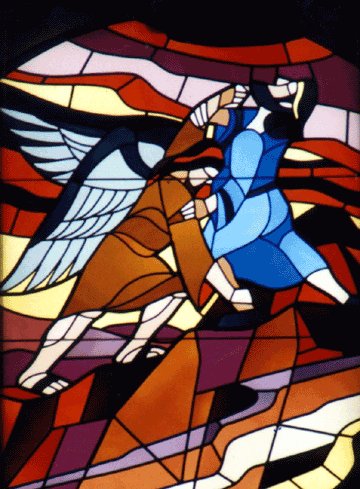
It’s an incredible story. And I’m not doing it justice by paraphrasing it, so I encourage you to read it for yourself in Genesis 32. I don’t intend to keep us in suspense, so suffice it to say that the family reunion went off without a hitch.

Jacob and Esau greeted each other with brotherly love, tears of joy, and a warm embrace. They were both gracious, generous, and humble. A beautiful story of restoration, if there ever was one.

The Lows

Unfortunately, this isn’t where I wanted to land today. I wish it was. I wish we could always end on a high — leaping from one mountaintop to the next. But that’s not life. And sadly, many of us Christians think that it should be, simply because we follow Jesus.

Instead, we’re turning the page in Genesis. The next chapter is a horrific story within the sensitive topic of rape. So please consider this your disclaimer.

I had discovered the tragic story of Jacob’s daughter, Dinah, many years ago. But it was only recently that I realized its proximity to Jacob’s wrestling match and family reunion.

To me, this is extremely significant.

So, after things go well between Jacob and Esau, Jacob pitches his tent and sets up an altar, calling it, El Elohe Israel, meaning: Mighty is the God of Israel.

This seems like a no-brainer. It’s the kind of moment that warrants an altar or monument or tattoo with the phrase Mighty is the God of Israel. Heck, I’d slap that on my skin too if God did all that in my life!

Can you picture it? You have this incredible encounter with God. Perhaps you even have a specific, personal experience you can draw on here! A heavily spiritual moment that changed you and changed your relationship with God. Maybe you felt like a whole new person, with a whole new name and outlook on life. You finally KNEW God, not just knew about Him, and now riding the high of that mountaintop experience.

But it didn’t stop there. Maybe you then received the answer to a huge prayer. Perhaps a physical healing, or like Jacob, a restored relationship with a loved one that was previously fractured.

Unfortunately, as we read on, we discover that mountaintops are not immune to gravity, or to the gravity of hardship. Sometimes we tumble down, down, down.

For Jacob, the low came in the form of a man violating his daughter, Dinah. Genesis 34 is a standalone chapter in the story of Jacob where his daughter heads into town to make acquaintances with the women of their new home. Dinah is noticed by the son of the ruler of the area, and he rapes her.

In response, two of Dinah’s brothers, Simeon and Levi, acted on the philosophy that two wrongs do in fact make a right, and proceed to attack the unsuspecting city, killing every male.

The whole story is just one horrific event after another, and you can probably guess why Genesis 34 doesn’t usually make the cut for children’s Bibles.

Should I rise or should I fall, You were faithful through it all

What was hard for me to come to terms with in all this, is that after Jacob finally got his act together… After he finally quit depending on his own wits and scheming to get his way. After he finally knew God in a personal way, and not secondhand from his parents. After he finally submitted in humility to what God was doing in his life. After he came to a place of peace and restored relationship with Esau.

After all this… shouldn’t Jacob continue living in the Lord’s favour?
Hadn’t he learnt all the important life lessons and was ready to follow God in blessing?
Hadn’t he earned some time on the mountaintop?

Instead, tragedy befalls his family quicker than it took us to turn the tissue paper pages of his story. His vulnerable daughter is violated. And the vengeance taken by his two sons, brings even more harm to Jacob’s family as a result.

It’s just not the unfolding story any of us would ever hope for. But it’s life.

Here are some takeaways from this:

  • Choosing to follow God doesn’t mean endless mountaintop moments.
  • Choosing to follow God doesn’t mean we are shielded from the effects of a broken world
  • Choosing to follow God doesn’t mean our children are spared from hardship.
  • Choosing to follow God doesn’t mean our children will make the right choices either.

In the end, it really is about our choice. Do we choose God? Even in the lows?

He is always, ALWAYS faithful to us and chooses us. But each of us has to decide if He is worth it. It can be scary to acknowledge that the things we might fear will happen to us or our loved ones, very well may happen anyway.

I would have fully expected that Jacob’s life would have gone swimmingly after he finally encountered God in that wrestling match. Dinah’s tragedy proves this wasn’t the case for Jacob. But, He still chose God.

Do we still choose God in the highs AND in the lows?

What’s in the Ears

My favourite line of this song is: Should I rise or should I fall, You were faithful through it all. And He is. He really is faithful through all of it.

I don’t love the heaviness of this topic, but I wouldn’t be doing us any favours by pretending hardship is automatically lifted just because we follow Jesus. Do you have any thoughts on this? Please let me know in the comments or send me a message. And don’t forget to share with a friend!

Podcast available on Apple Podcasts, Spotify, and Anchor!

What a Disappointment

Podcast available on Apple Podcasts, Spotify, and Anchor!

I’m not angry, I’m just disappointed…

Anyone had that line thrown at them growing up? It stings, doesn’t it? We can easily feel like we’ve fallen out of someone’s good graces when we’ve disappointed them.

Or maybe you just can’t look at someone the same way after being so painfully let down. The relationship has changed and you can’t seem to come back from that disappointment.

Our loved ones disappoint us, we disappoint them. We are fickle and relationships change.

Thankfully, God is not like us.

Although sin stirs His anger, His love for us CAN. NEVER. CHANGE.

Here’s why:

1. God is omniscient

(All-knowing)

Meaning, He knows all that has happened, is happening, and will happen. God knows it all. Which means He created us knowing we would fall short of His standards.

…for all have sinned and fall short of God’s glory.

– Romans 3:23

And yet God chooses to heal and forgive you!

He delights over you with gladness! He will calm all your fears and rejoice over you with song.

– Zephaniah 3:17

Despite knowing your worst, God chooses to bless you and include you in His good plans to bless others!

In love [God] chose us before He laid the foundation of the universe! Because of His great love, He ordained us, so that we would be seen as holy in His eyes with an unstained innocence.

– Ephesians 1:4

God sees us from a divine perspective

This is significant, so don’t miss this!

When we surrender our lives to Jesus, His glory is magnified in our lives, and He forgives our wickedness and remembers our sins no more. (Hebrews 8:12)

Friends, He doesn’t even remember our sins! How can God be omniscient AND also forget our sin?

Because He chooses to see Jesus’ atoning work on the cross to redeem us instead!

An omniscient God can be trusted to know that Jesus’ sacrifice truly is the best plan of salvation imaginable. We couldn’t come up with something better if we had a thousand lifetimes to try.

Thinking that we could add or take away from God’s love for us, implies that Jesus’ sacrifice wasn’t enough to save us. But it was! And because of it, we are enough in God’s sight too.

We are enough for Him, solely because Jesus is enough for us.

Isaiah 53:10 says that it actually pleased God to crush Jesus and cause Him grief through death. It was through Jesus that God’s purpose was to be accomplished: the salvation of our souls. So all of God’s wrath reserved for sin was fully absorbed in Jesus on the cross.

But what does this mean in our daily lives?

Do we carry on sinning so that God’s kindness and grace will increase? (Romans 6:1) That’s a hard NO!

Sin dies with us when we surrender our lives to Jesus. Though we still fight against sin, God’s omniscience means He knows what we are and He loves us the same – on our best days, and our worst.

What’s more, our FEELINGS do not disappoint Him because He created us to feel each one in response to something we experience.

Maybe you’re confused, frustrated, hurt, disillusioned, or even jaded by what God is doing or NOT doing.

I’m convinced He is more disappointed when we hide our true feelings from Him, rather than just being honest with Him and ourselves about our struggle to trust and surrender.

Doubting Thomas? More like, Confident-Faith Thomas!

Consider how Thomas in John 20 wanted physical evidence of Jesus’ resurrection. When Jesus finally appeared to Thomas and the disciples, He greeted them all, but He addressed Thomas directly. Jesus invited Thomas to reach out and touch His wounds. He encourages him to stop doubting and believe.

Have you ever noticed that there is no record of Thomas actually touching Jesus? Yet Jesus’ invitation was there. He offered the tangible opportunity to dispel Thomas’ doubts because Jesus knew Thomas, and He knows us.

He knows we are prone to doubt. He knows it is sometimes hard for us to trust. He isn’t disappointed with how we might feel.

But perhaps the assurance of faith that Thomas so desperately wanted is exactly what Jesus honoured by allowing him to explore for himself.

Perhaps Jesus wants to see that in all of us. Echoing author Angie Smith: like Thomas, we don’t question God because we want to prove He doesn’t exist, we question because we want to rest in unshakable faith!

So we can freely wrestle through those doubts, trust issues, and ugly emotions with God without fear of disappointing Him or losing His love.

2. God is unstoppable

At the end of Job’s tragic but redemptive life, Job tells God:

I know that You can do anything. No one can keep You from doing what You plan to do.

– Job 42:2

Other translations say that God’s plans could never be: thwarted or withheld, frustrated, restrained, ruined or hindered.

WOW! Whatever God wants to do, whatever He wants to accomplish on this earth, in your life, in your family, in your character, in your destiny… it. will. happen. It cannot be stopped. God cannot be stopped. Because God’s plans always come to fruition.

There is nothing we could do to ruin what God has put into motion before the foundations of the earth. The hard truth? We’re just not that powerful – and that’s a good thing!

A line from the song I’ll be sharing at the end says:

I’ll never be more loved than I am right now. Wasn’t holding You up, so there’s nothing I can do to let You down.

Coming to terms with how small we are in the presence of a Holy God should humble us. But realizing how loved we are, how good His plans are, what He gave up to save us, should draw us all the closer to Him too!

Because only He can heal brokenness, pain, rejection, and sin. Only He can do it. His plans cannot be stopped. And neither can His love for us.

3. God is immutable

(Does not change)

God has never changed and can never change in any smallest measure. To change, He would need to go from better or worse or from worse to better. He cannot do either. For being perfect, He cannot become more perfect, and if He were to become less than perfect, He would be less than God.

A. W. Tozer

Here’s the connection:

If God does not change, His thoughts towards us don’t change either. We are loved fully and completely in every moment.

The psalmist says in Psalm 139:17

How precious to me are your thoughts, O God!

Let’s conclude with some of God’s unchanging thoughts towards you:

  • You are chosen (1 Peter 2:9)
  • You are treasured (Deuteronomy 14:2)
  • You are protected (Psalm 121:3)
  • You are His masterpiece (Ephesians 2:10)
  • You are free (John 8:31)
  • You are forever loved (Jeremiah 31:3)

What’s in the Ears

This line of the song bears repeating:

Wasn’t holding you up, so there’s nothing I can do to let you down.

Friend, you can put down that burden. You can let go of that pressure. You can stop trying to avoid disappointing God through perfect performance. He can take it. You’re not fooling Him because He already knows. He wants you to admit your weakness so you could finally accept His sufficient grace. For His power is made perfect in your weakness. And we can boast in our weaknesses and struggles, because that is where God’s power dwells. In the parts of our lives that feel like a disappointment, that’s where His power can manifest most.

If this resonates with you, let me know in the comments, send me a message, or even share with a friend!

Podcast available on Apple Podcasts, Spotify, and Anchor!

A Seat at the Table

*Check out the podcast version on Spotify or Anchor!

This phrase is trending hard as social, political, and racial unrest continues to challenge the status quo.

Who deserves a seat at the table? Who doesn’t? Who owns the table? Who decides who gets a seat? Can I just build my own table – with my own set of standards and conditions of merit?

Let’s cool it for a sec, and remember that actually… NO ONE deserves a seat at the table!

No one is right with God. Not. Even. One.

– Romans 3:10

Now, there’s a story in 2 Samuel about a special seat, at a special table that I really think is worth exploring.

It takes place long after David slays Goliath, and after King Saul turns on David and tries to have him killed. Our story begins after David is finally crowned king of Israel himself.

Our new king asks a question. It’s a simple question, and we may not even pay it much heed. But he asks:

“Is anyone in Saul’s family still alive—anyone to whom I can show the kindness of God for Jonathan’s sake?”

2 Samuel 9:1

I had to ask myself, why is this on his radar? Why does David feel compelled to show God’s kindness to Saul’s family? And what would that even look like?

Here’s the lowdown:

  • First of all, he wasn’t actually compelled, because…
  • It was not out of guilt or obligation.
  • And it wasn’t even about Saul at all!
  • He was committed to a covenant promise he made to his friend, Jonathan. That’s it.

In 1 Samuel 20:14-15, Jonathan had pleaded with David to promise to show his family kindness even after Jonathan passed.

So now, David’s on a mission. He is determined to keep this covenant promise to his dear friend. And even though Jonathan isn’t around to benefit from it, or even know about it, he will not be swayed.

Finally, David finds Mephibosheth, Jonathan’s son. He was crippled after a tragic childhood accident, and could no longer walk. He was in hiding out of fear of what David might do if he was discovered.

Mephibosheth was terrified of David for two reasons:

  • He was the grandson of David’s rival and enemy, King Saul
  • His very existence was a threat to David’s throne and rule

So this is not an unreasonable concern or irrational fear. Because under normal circumstances, a new king would do everything in his power to eliminate any threat to his throne as well as any remnant of a former dynasty.

Mephibosheth was absolutely both of those things.

Instead of focusing on himself and his fear, he should have focused on who David was: the rightful king, fulfilling a covenant promise to his father, Jonathan.

Because David followed God, the kindness of God that David wanted to bestow on Jonathan’s family was a direct outpouring of the kindness that he had received from God first.

So what does David do when he finds Mephibosheth?

He doesn’t kill him or exile him. He doesn’t torture him or punish him.

David responds with compassion:

He tells Mephibosheth to not be afraid.
He restores to Mephibosheth all of the land that belonged to Saul.
He gives Mephibosheth a seat at the king’s table for the rest of his days.

This meant that David didn’t just allow Mephibosheth to inherit what had previously belonged to his family…

But through David’s extravagant generosity, Mephibosheth was invited into the king’s inner circle, and he and his household were provided for, for the rest of their lives!

Let’s consider how we might relate to this story.

Do you want a seat at God’s table? Do you, like Mephibosheth, see yourself as an enemy of God?

Isaiah 30:18 says that, God is full of mercy and rises to show you compassion…. not because of righteous things you’ve done, as we find in Titus 3:5, but because of His great love.

I hate to break it to you, but we don’t deserve that seat. We just don’t.

Because of the inherent sin we possess from birth, we are disqualified from a seat at the table.

Just as Mephibosheth whose grandfather, Saul, tried to have David killed, Romans 5:10 says that we were God’s enemies.

But as David made a covenant to Jonathan, which had absolutely nothing to do with the evil in Saul’s heart… so too did God make a covenant to His people that overrides the sin in our hearts.

In addition, David’s covenant did not hinge on the actions of Jonathan’s descendants: namely, Mephibosheth who was hiding out of fear of David and his own personal shame.

So in the same way, any ongoing shortcomings we may continue to raise as a barrier between us and God, do not affect the extravagant generosity of God’s covenant and the offer of a seat at His table.

Like Mephibosheth, we need our King to rescue us. We are poor, lame, weak, and fearful. We cannot save ourselves. We desperately need the kindness of God extended to us through His hand of restoration, redemption, and forgiveness.

But let’s not settle too comfortably into the seat of the helpless victim.

For we are not just Mephibosheth in this story – an enemy of the king. If you’re like me, and you’ve recognized your own poverty and need of a Saviour, then we can’t stop the story there.

Friend, you and I are also King David in this story! And he was known as a man after God’s own heart.

David’s actions here are like the ultimate pro tip on kindness.

How can we, like David, use our influence to fulfill the covenant promise we make as believers? How can we show God’s kindness to others, inviting them to sit at His table?

Here’s a page out of David’s book:

  • Seek out those in need of God’s kindness
    This required work on David’s part! Mephibosheth didn’t run to David for saving. David sought him out, not the other way around. Let’s not assume that because there’s no one in need at our door step, that there’s no one in need at all.

The Son of Man has come to seek out and to give life to those who are lost.”

– Luke 19:10

As followers of Jesus, we’re invited to be part of that mission and do the same! Because the fields are ripe for harvest, but the workers are few. (Matthew 9:37)

  • Bless those who don’t deserve it. Even our enemies.
    Ok, enemies is a strong word, and maybe you look around and don’t notice any. But surely you know people who rub you the wrong way… with whom you strongly disagree… whose lifestyle or life choices is perplexing to you at best.

    Mephibosheth was an enemy and a threat to David’s throne, but David’s relationship with Mephibosheth’s father, Jonathan meant more to David than that. And the covenant they shared was more important than any threat to David himself.

    Are we similarly committed to our own role in the covenant promises of God to show kindness to a world that needs it?

I close the best way I know how. By quoting a different Saul – who turned Paul, from Romans 12:9-21:

What’s in the Ears

In reflection… do you feel yourself unworthy of a seat at the King’s table? Mephibosheth certainly did! In fact, in verse 8 he asked David why he’d concern himself with a dead dog such has himself? Those are strong words!

Although we are undeserving, God has sought us out and offers us a seat at His table through His Son, Jesus. In gratitude of the kindness God has shown us, let’s consider how we may show the kindness of God to others in turn.

Have you got any thoughts on this you’d like to share? Send me a message or comment below!

*Check out the podcast version on Spotify or Anchor!