The Holy Mundane

*Check out the podcast version on Spotify or Anchor!

This is my life. This is the tension in which I live. The desperate desire to live in what scholars refer to as the sacred.

The spaces and places and moments and actions that we believe are dedicated to God and pleasing to Him as holy.

On my ideal day, this is what sacred or holy looks like:

  • Bible reading
  • blog research
  • blog writing
  • Bible study prep
  • leading Bible studies
  • listening to podcasts or sermons
  • listening to worship music
  • prayer or meditation
  • attending church with my people

Basically, a dream day!

And then, lurking in the corner as a constant pull and vying for my attention is the mundane. Or what scholars refer to as the secular.

The average secular day looks like this:

  • feed kids multiple times in the day
  • errands with kids
  • chauffeuring kids to school, extracurriculars, and various activities
  • make all the meals
  • laundry, laundry, laundry!
  • work calls and emails

Cheers to the secular.

Sacred splash pad

I hope that sharing my own experience, and how I’m learning to manage this tension will be a blessing to you in your own journey.

I recently read The Pursuit of God by A. W. Tozer, and he says this:

These secular tasks we often do reluctantly and with many misgivings, often apologizing to God for what we consider a waste of time and strength. The upshot of this is that we are uneasy most of the time. We go about our common tasks with a feeling of deep frustration, telling ourselves reflectively that there’s a better day coming when we will shake off this earthly shell and be bothered no more with the affairs of this world.

– A. W. Tozer

Friends, I can’t begin to express how deeply this resonated.

It’s not specifically about apologizing to God for not spending more time in sacred activities.

But I’m sure on a subconscious level, that I believe I’m somehow more pleasing to God, that my time is better spent, that I best fulfill my purpose, or that I am more worthy of His love when I toil away at my sacred passions.

Perhaps you’re like me and you grow resentful of time spent away from the things that make you feel closer to God. When really, He never meant for there to be a difference! On the contrary, He has always intended to meet us everywhere!

Sacred ball park day

As we navigate the tension between sacred and secular, we could not find a better model than Jesus for the best outlook.

By the end of Jesus’ life on earth — when all was said and done, and He ascended to the Father in Heaven, God accepted the offering of His life in its entirety.

Friends, please understand this with me, because it was truly a game-changer in how I view my own mundane, secular life.

God didn’t make a distinction between sacred or secular, between holy and mundane. In fact, in John 8:29, Jesus Himself said, I always do what pleases the Father.

If that was truly the case…

…then there’s no ranking of tasks, nor hierarchy of holiness!

All that Jesus did brought glory to God. And this was made possible because His whole life was dedicated to God’s glory. He didn’t engage in certain sacred activities with the subconscious thought that they were holier than others and therefore distinct in some way. The mundane, secular activities were therefore holy as well. All of it dedicated to God.

The Apostle Paul says in 1 Corinthians 10:31, that whatever you do – even eating and drinking! Do all of it for the glory of God.

Nothing is off limits. It’s all for Him! Every mundane task, even those we don’t like. No, especially those we hate! – They can be sacred acts of worship to God when we do them for His glory.

Sacred ice cream treat

Here’s another way to look at it:

In the Old Testament, the sacred place was the tabernacle, and later the temple, where God would meet with His people. The shekinah glory of God — the physical manifestation of God’s presence on earth, could only be seen and experienced in the sacred space: The Holy of Holies. The centre of the temple, where only the high priest could enter.

Then, John 1:14 says, The Word (Jesus) became flesh and dwelt among us. The original language for dwelt refers to setting up a tabernacle.

Friends, this means that Jesus Himself became the Holy of Holies on earth. His incarnation was the sacred space to meet with God. So when we walk with Jesus, and His Spirit indwells us, our whole lives are that sacred space too!

We no longer need to qualify for the priesthood to enter a sacred temple to meet with God. Even a religious establishment is not seen as more holy than your own kitchen or car.

Let’s go a step further

If the birth of The Church took place in the upper room of a house where Jesus’ followers were huddled together and waiting for what only God knew, then why not your upper room?

God filled that room, filled that space, filled their lives with the very sacred and Holy Spirit that raised Jesus from the dead.

It was a mundane, secular upper room. But it became holy ground when God showed up. And those ordinary people became sacred vessels of God’s Spirit. The holy mundane.

Sacred skate park

The Aggressive Faith

For us to realize this truth in our own lives, we have to be INTENTIONAL about how we view our mundane tasks. This calls for what Tozer refers to as aggressive faith:

We must offer all our acts to God and believe that He accepts them. Then hold firmly to that position and keep insisting that every act of every hour of the day and night be included in the transaction. Keep reminding God in our times of private prayer that we mean every act for His glory…. Believe that God is in all our simple deeds and learn to find Him there.

Friends, there’s nothing special about a holy task. Rather it’s that it is done to glorify a Holy God. So even reading the same stupid dinosaur book to my daughter, or playing yet another round of Guess in 10 with my boys can be holy. Because I do it for God’s glory.

  • I wipe noses for God’s glory.
  • I cut up apples for God’s glory.
  • I fold laundry for God’s glory.
  • I’m awoken in the middle of the night for God’s glory.
  • I break up fights for God’s glory.
  • I prepare meals for God’s glory.
  • I write an email for God’s glory.
  • I correct behaviour for God’s glory.

Because whatever I do, whether in word or action, I can do it all for God’s glory.

– Colossians 3:17 (my edits)
Sacred wonderment at God’s creation…
So what’s the difference?

I close with a final punch from Tozer

It is not what you do that determines whether your work is sacred or secular, it is the why you do it.

The motive is everything…. So as you perform your never so simple task, you will hear the voice of angels saying, “Holy, holy, holy is the LORD Almighty; the whole earth is full of His glory.”

What’s in the Ears

This is definitely not a worship song, but it’s a favourite. A classic from 1972 and actually quite sad! But it’s got a happy tune with a catchy beat and my family loves dancing to it. So for us, it’s sacred. And I guess that’s the whole point.

Do you view your own mundane, secular life as holy? Do you see it as sacred to God, for His glory? Please share your thoughts in the comments or send me a message.

If this spoke to you, share it!

*Check out the podcast version on Spotify or Anchor!

Paradigm Shift at a Pig Roast

*Check out the podcast version on Spotify or Anchor!

I was part of a book club this summer that went through Out of Sorts by Sarah Bessey. It’s about making peace with an evolving faith.

It really helped me nail down things I have struggled with over the last little while – particularly when it comes to the Church, her role in the world, and my own role within all that.

I’m hoping some of my own thoughts on this will be helpful to you as well!

As you may know, I was a history teacher before I started raising kids in Essex County, so this next bit really fascinated me. I’ve made it as concise as is humanly possible, but reach out to me if you want more!

The history of the Church has had four major paradigm shifts including her inception at Pentecost.

A paradigm shift occurs when a new discovery is made, new research is revealed, or new techniques are developed that changes the way of thinking or doing things.

Since these paradigm shifts have taken place roughly every 500 years, that should tell us a lot about where we might be heading!

  • The first was the foundation of the Church itself at Pentecost
    This consisted of the Holy Spirit falling upon Jesus’ disciples in the upper room in Acts 2. Then followed by the Apostle Peter being filled with the Spirit and addressing the crowd where thousands came to faith on that very day.
  • The second was when the Roman Empire fell, and the Dark Ages of Christianity were born, circa 500
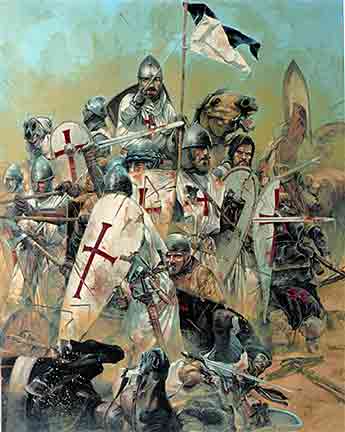
    These medieval years were unfortunately tainted with Holy Wars and Crusades that did little good to draw ordinary people to the Saviour.
  • The third is known as the Great Schism in 1054
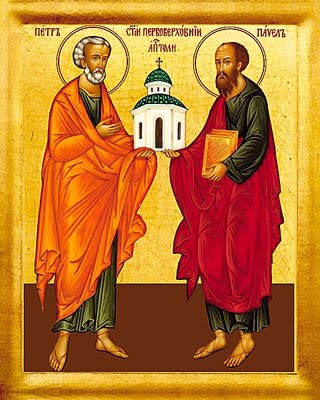
    At this time, there was conflict in the church. Most of it surround the belief that either Peter or Paul was the first official head of the church, as well as debates surrounding a Pope. My overly simplified response to that is… Jesus? Regardless, this resulted in the first of countless church splits. And the Catholic and Orthodox Churches were born.
  • The final shift took place during the Enlightenment Period and is known as The Reformation
    This is when opposition arose against the corruption and absolute power of the Roman Catholic Church and the Protestant Church was born.

I sure hope y’all enjoyed that little history lesson as much as I enjoy learning about these important markers of our history. Because many church scholars and theologians would argue that we’re about to enter another shake up in the life of the Church.

Buckle up kids, it’s going to be a bumpy ride! I mean, I say this in jest, but actually, it’s all very serious and intense.

Keeping in mind these important changes in Church history, I am dying to get to the good stuff of this post found in Acts 10, and I can’t wait to share some applications I am trying to adopt in my own life too.

Let’s check it out together.

Three main things happen in Acts 10

  • Cornelius, a Roman Centurion, is visited by an angel because he is a devout, God-fearing man who gave generously to those in need and prayed to God regularly (vs. 2). The angel tells him to send for a guy named Peter and have him come to his home. He does just that.
  • Meanwhile in Joppa…. the Apostle Peter is hungry and up on a rooftop praying. Suddenly, he has a vision of this sheet coming down in front of him and all kinds of animals are on it. Some kosher, some non-kosher.
    In his vision, God tells him to kill and eat. Peter, in his usual adversarial manner, argues with the Lord that he cannot eat meat that is impure and unclean. God tells him, do not call anything impure that God has made clean!
    They go back and forth on this three times. (Because apparently “three” is the magic number for Peter!) While he’s thinking about this vision and what it might mean, the men who were sent to fetch Peter arrive and escort him to Cornelius’ home.
  • Peter meets with Cornelius and tells him that technically he shouldn’t even be there since Cornelius is a Gentile (non-Jew) and it’s unlawful for them to even associate.
    Peter then asks Cornelius why he sent for him. Cornelius isn’t exactly sure! He tells Peter that an angel told him to send for a man by his name, so he did.
    Peter then realizes the meaning of the sheet with the impure and unclean animals.

And this is where it all comes together…!

This story is about including non-Israelites into the family of God. Because guess what? After Peter tells Cornelius all about Jesus, Acts 10 concludes by saying:

…the Holy Spirit came on all who heard the message. 45 The circumcised believers who had come with Peter were astonished that the gift of the Holy Spirit had been poured out even on Gentiles46 For they heard them speaking in tongues and praising God. Then Peter said, 47 “Surely no one can stand in the way of their being baptized with water. They have received the Holy Spirit just as we have.” 48 So he ordered that they be baptized in the name of Jesus Christ.

So, even though Peter’s vision was about God permitting the consumption of ritually impure foods, the vision was only a symbol God was using to prepare Peter for a huge paradigm shift in the early Church!

What was the shift?

  1. No longer have to keep kosher
  2. No longer have to be circumcised to be included in God’s family

WHAT DOES THIS SHIFT IMPLY?

NO MORE DIVISION
ONLY DIVERSITY

Y’all I don’t know how to communicate what a HUGE deal this was for the early believers. Or if we can fully appreciate what this meant for the people they rubbed shoulders with in their daily lives.

To think that after thousands of years, the very things that set them apart as God’s chosen people, namely: circumcision and keeping kosher… these were no longer requirements for being included in God’s family. And it is BLOWING MY MIND.

So what’s the point?

Friends, let’s be open to what God desires to change in our way of thinking. Now, don’t hear what I’m not saying. I’m not talking politics. I’m not talking Covid. I’m not talking the right or wrong way to do church.

  • I’m talking about each of our individual views of God. How we perceive Him, and how those perceptions INFORM the way we see our world.
  • I’m talking about how those views of God FRAME our perceptions of the people around us.
  • I’m saying, let’s ASK God for vision-of-a-pig-roast kind of moments
    • to shake up our thinking
    • to prepare us for what’s coming
    • to equip us with His wisdom and His heart to interact with HIS world the way He desires for us!
  • I want the next paradigm shift to resemble a Peter and Cornelius moment; rather than the schisms of division or the crusades of holy war that have for too long tainted the Church of Christ and her mission in the world.

And what’s the mission?

To love God. (Deuteronomy 6:5)

To love people. (Mark 12:31)

To make disciples of ALL NATIONS. (Matthew 28:19-20)

What’s in the Ears

This song is a little different than my usual, but it’s my favourite on Dante Bowe’s new album, as well as being very well suited to this topic, so win-win. Enjoy!

Ok I need to know your thoughts on this! Was any of this new to you? Does it resonate? Do you agree/disagree? Let me know in the comments or send me a message!

*Check out the podcast version on Spotify or Anchor!