The Long and Winding Road

*Click HERE for the podcast on Spotify!

Have you ever heard a familiar story with fresh ears and been left dumbfounded at any nuances or parallels you didn’t notice before?

Sometimes I facepalm at the obvious things I’ve missed. Other times, I’m left in awe and wonder over some new revelation, thanking Jesus for yet another reason to love Him. This one was a mix of both.

I’ll make this a quick summary since most of us are at least vaguely familiar with the story of the Prodigal Son found in Luke 15.

  • A wealthy man has two sons.
  • The older son works hard to remain in the good graces of his father.
  • The younger son has had enough of playing by Dad’s rules and wants his share of the estate now, rather than after his father has passed, as was, and still is, the custom.
  • The father agrees and gives him the money.

The son bounces outta there before the door could hit him on his way out.

  • He moves far away, blows through the money as quickly as he claimed it, and winds up dirt poor.
  • He gets a job feeding pigs and comes to his senses, realizing that even his father’s hired help is better off than he is.
  • So he sets off for home with the hopes of convincing his father to let him stay as a servant.

While he was still a long way off…

This is where the story gets soooooo good, y’all! I hope you are HERE. FOR. IT!

To fully appreciate what happens next, we have to understand what was so unconventional about the father’s actions in the story.

For starters, we tend to focus on the prodigal son, understandably! His decisions, his experiences, his actions, reactions, and behaviour.

But to me, the character who raises more eyebrows and inspires the most questions is actually the father.

In The Cross and the Prodigal, Kenneth E. Bailey encourages us to recognize that in the culture of the time, the father didn’t behave as any respectable man would or should. After receiving his requested share of the inheritance, the son would have been cut off from the family. Completely dead to him.

But the father waited for his son.

How do we know this? Because in Luke 15:20, it says:

…while he was still a long way off, his father saw him coming…

The father hadn’t cut him off! He was longing for his wayward son and waiting eagerly for his return. Verse 20 continues by saying:

Filled with love and compassion, he ran to his son, embraced him, and kissed him.

Additional cultural context helps us appreciate how unusual this really was.

A man of this social standing, from this time in history simply… did. not. run.

He just didn’t!

And not for the same reasons I don’t run, ie: lazy, napping, busy eating tacos, writing this blog.

No, to run would be shameful and disgraceful. He’d have to hike up his tunic and expose his legs – no respectable man would do such a thing. It would be humiliating to be so exposed, and the embarrassment of running in addition to that would’ve been downright scandalous.

It’s also worth noting that for the father to see his son while he was still a long way off, he would’ve had to have been looking out for him down a public road where the community would also recognize him approaching.

It would’ve been commonly understood that the son was no longer welcome in their community because of his contemptuous behaviour towards the father and their customs. The son would have known this as well, which is why he’s fearful about his return and cautiously unsure about his welcome.

Keeping all this in mind…

We can see that the journey to the cross was for Jesus… what the journey to the son was for the father when the prodigal was still a long way off.

Jesus’ journey to the cross was shameful. His death? Humiliating.

And the father’s response to his son was similarly scandalous as he risked everything to meet the prodigal where he was, before condemnation could fall on him by the community of accusers.
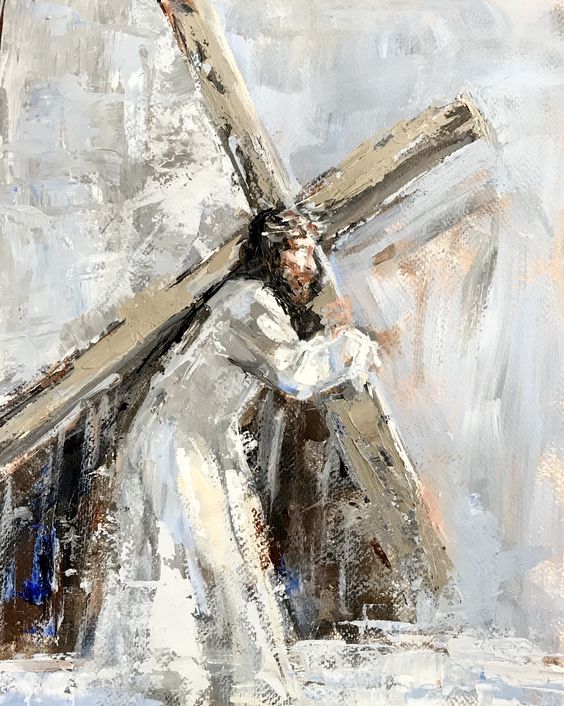
Do you see the parallel? When the son was still a long way off…… while we were still sinners……

The father ran to meet him. He put his own robe onto his son… (I will sing and greatly rejoice in Yahweh! My whole being vibrates with shouts of joy in my God! For He has dressed me with salvation and wrapped me in the robe of His righteousness! Isaiah 61:10)

….and put his ring on him – the ring with the seal of sonship. (I will set you as a signet ring, the sign of My sovereign presence and authority. Haggai 2:23)

The shame of the son was COVERED by the righteousness of the father. Y’all, Jesus did that for us!!! While we were still sinners… a long way off.

So when our accusers surround us with condemnation, we needn’t recite our overly-rehearsed apology with long-winded explanations.

When the son began his own pigpen apology, his father interrupts him, and stars ordering servants around to get the welcome party started!

22  ‘Quick! Bring the finest robe in the house and put it on him. Get a ring for his finger and sandals for his feet. 23 And kill the calf we have been fattening. We must celebrate with a feast, 24 for this son of mine was dead and has now returned to life. He was lost, but now he is found.’ So the party began.

Meanwhile, in tragic contrast, the older son was working at home. Not being lazy or entitled, but diligently working for his reward.

Unfortunately for him, the father doesn’t honour this. So, he resents his brother and writes him off as entitled.

We may shake our heads at this brother who didn’t seem to understand the heart of his own father. Yet how often do we behave just like him?

We can see people abusing God’s grace and mercy in their own lives, condemning them in our hearts as unworthy of His love.

But the truth is that our Father doesn’t want us for what we can DO for Him!

After all, He loves each of us—good and evil, kind and cruel. He causes the sun to rise and shine on evil and good alike. He causes the rain to water the fields of the righteous and the fields of the sinner.

– Matthew 5:45

We are not responsible for our own redemption. It’s Jesus’ sacrifice on that humiliating cross that enables us to be fully restored and forgiven. There’s nothing we could say to earn it, and no amount of hard work and devotion could merit the position of sonship He offers freely.

Jesus paid it all… All to Him I owe….

Here are my main takeaways, I hope they bless you!

  • What the father did for his son was bigger than I realized…
    As was Jesus’ sacrifice for us!
  • The prodigal played a tiny role in his own restoration…
    Just draw near to the Father and recognize your need for Him!
  • The older son’s loyal work didn’t bring him into better standing with his father…
    Let’s not presume to know what God thinks of the people who are not like us, or behave like we would. Let’s not judge their journey to God.

Because ultimately, God took that journey to us.

And that long and winding road?

It led to the cross.

What’s in the Ears

I hope this familiar story has been made new to you in some way. Did you discover a new appreciation for the father? New compassion for either son? Share your thoughts in the comments, or send me a message!

*Click HERE for the podcast on Spotify!

Dead and Gone

*Audio version now available on Spotify podcast!

Full disclosure, since starting this blog, I find it hard to read the Bible without a radar on the hunt for inspo on my next topic. This is case-in-point.

So, I was going through 2 Kings when I came across the most bizarre story spanning just two verses. If you thought the Bible dragged on to make a point, don’t look to this story as your example. It’s short and sweet, and weird!

So 2 Kings 13:20-21 starts by telling us that the prophet Elisha was dead and gone.

Ok, what it actually says is, “died and was buried”. But Justin Timberlake is a whole vibe. Even from 2008.

So after this status report on Elisha, we’re told that Moabite raiders were marauding. Meaning: to go about in search of things to steal or people to attack.

Some Israelites were burying some guy when they spot this group of marauding Moabites. They panic and toss the body into the nearest hole before running away.

That hole happened to be Elisha’s tomb.

This is already weird. But then… *pause for effect* the dead body lands on Elisha’s bones and is immediately resurrected upon contact.

When the body touched Elisha’s bones, the man came alive, stood up, and walked out on his own two feet!

– 2 Kings 13:21b

And that’s the whole story! Thanks for coming to my TedTalk.

Ok not really… Besides this posthumous anecdote, here’s some background on Elisha:

  • Followed God
  • Performed many miracles
  • Lived life with integrity
  • Served God with humility
  • Prophesied boldly

Knowing this, I’m not entirely surprised that God continued to work through Elisha, even after Elisha was dead and gone. #JTReference

Well this unique situation – you know, where a dead man was casually resurrected because his body landed on the bones of a dead prophet? It got me thinking about IMPACT.

If our faith really means something to us, then it should mean something in the real world too. Otherwise, what kind of impact are we really making?

Are we leaving people better off than when we met them?

Because Elisha lived his life with integrity and in obedience to God, God continued to make his life count in the real world long after Elisha was dead and gone.

Oh how that inspires me!

The thought of making a positive impact on someone long after our paths intersect… isn’t that what it’s all about?

But this doesn’t happen with a sprinkle of wishful thinking, a dash of good intentions, a side of hope-it’ll-work-out, or your fairy godmother’s bibbidi-bobbidi-boo.

A life of integrity is a generous serving of self-sacrifice and a bottomless pitcher of laying down your life for others (John 15:13).

It’s trusting God in obedience when it doesn’t always make sense or suit us. It’s doing something for someone who can’t return the favour. When no one’s watching to praise us for it.

It’s real surrender in the trenches that produces the fruit of godly living.

Let’s consider this analogy:

Can I call myself a runner if I only think about running?

  • Perhaps I’m really passionate about my research on running.
  • Perhaps I follow runners’ blogs and Instagram accounts featuring the most popular runners.
  • Perhaps I watch races on TV and join online chats to discuss runners’ techniques and strategies.
  • Perhaps I have running gear! Sporting the latest in runners footwear and breathable apparel.
  • Perhaps I join a running club with runners who love the sport.
  • Perhaps I even adhere to a strict diet and exercise routine that is proven to help improve my running game.

But I don’t run. Ever.

Even with an interest in running, and head knowledge behind it, can I honestly call myself a runner if the soles of my shoes never hit pavement?

Similarly, can I call myself a Christian if all I do is think about the ideals I’m aspiring toward?

Run with me one lap further.

  • Perhaps I read my Bible and Christian literature about how to be a good Christian.
  • Perhaps I follow all the best blogs (like this one, duh) and Instagram accounts featuring the trendiest Christian celebrities (That term should be a red flag, btw).
  • Perhaps I watch viral sermons and listen to famous podcasts discussing techniques and strategies for Christian living.
  • Perhaps I dress like a Christian! You know, modest is best. I even have those cool shirts with subtle reference to faith.
  • Perhaps I’m involved in all things “church” and surround myself with likeminded people.
  • Perhaps I even adhere to the strict code of conduct that all Christians should! The do’s and don’ts that prove piety and devotion to God.

But I don’t submit to the Lordship of Jesus. Not really. I don’t trust Him with my life. I don’t surrender my will to His. I don’t obey God in the areas I know He’s called me to. I don’t sit in stillness to hear from Him. When I pray, I just talk at Him…

Oh, and I don’t love people. Not really. I don’t serve my community. I don’t love my neighbour (definitely not my enemy). I don’t pray for those who hate me. I don’t show compassion to those who disagree with me. In fact, I don’t give much thought to those around me at all…

Can I really call myself a Christian, then?

Jesus made it super simple for us. All the law and prophets can be summed up in this:

Love God. Love your neighbour (Matthew 22:36-40).

Here are some simple scenarios to illustrate this point:

“You were the only person who noticed me in school.”
“Thank you for checking on me, even if you don’t know what to say.”
“Your gift helped us get through an impossible financial crisis.”
“Thank you for being kind, even if you don’t agree or understand.”

I am the sprouting vine and you’re my branches. As you live in union with Me as your source, fruitfulness will stream from within you—but when you live separated from Me you are powerless.

– John 15:5 TPT

My prayer is that Elisha’s story would stir in us a desire for the type of impact that’s so life-giving, people actually come alive because of God in us.

A word of caution:

  • We believe lies if we think we can do any good without the life-giving power of God at work in us.
  • We ALSO believe lies, if we think a small act of kindness isn’t worth doing unless it’s moving mountains or calling down fire from heaven.

Since Jesus Himself compared the Kingdom of Heaven to tiny seeds and buried treasure… let’s not forget how significant the small and hidden things can be!

The enemy of our souls would have us believe a text to encourage a friend, or a smile for a stranger isn’t doing enough. So we end up doing nothing! Let’s remember that some of the most life-changing work of the Spirit has been in the grassroots, not the flashy stage.

Of course, there’s also hard work and sacrifice – you don’t live a life of integrity and obedience by watching runners go by!

Remaining connected to God, our Source, and obeying Him through little things? That’s a sure way to make a lasting impact… long after we’re dead and gone.

So let’s not get tired of doing what is good. At just the right time we will reap a harvest of blessing if we don’t give up!

– Galatians 6:9

What’s in the Ears

This song is a reference to Ezekiel, not Elisha, but it’s still super good.

Were you familiar with this story about Elisha? Does it inspire you to reflect on the impact you’re making? Share your thoughts in the comments or send me a message!

*Audio version now available on Spotify podcast!