Got Lost in the Story: Scottish Lowlands Edition

When I shared a blog post more than two months ago with book recommendations, we were just beginning this Coronavirus quarantine, and it felt like a good time to suggest some reading material to help pass the time.

Well, I don’t know about you, but I never would’ve guessed that we’d still be here all these weeks later.

Since many of us still have loads of time on our hands, allow me to introduce another beloved author to help us get through this weird twilight zone:

Liz Curtis Higgs!

My favourites of her books are set in the 18th century Scottish Lowlands. There are two sets of series in particular that I absolutely love.

Disclaimer: If you read my previous book review post (which you can do by clicking here: https://fromtheoverflow.home.blog/2020/03/20/got-lost-in-the-story/),
then you know not to judge a book by its cover. So again, don’t be fooled by the sappy titles and cover art!

What’s distinct about these historical novels, is that they retell popular stories from the Bible. The first series is based on the tragic love triangle between the Hebrew patriarch, Jacob, and his two wives, Rachel and Leah. You can read the biblical narrative in Genesis 25-35. It’s got all the makings of a juicy drama.

Lowlands of Scotland
Tetralogy, by Liz Curtis Higgs

In the autumn of 1788, amid the moors and glens of the Scottish Lowlands, two brothers and two sisters each embark on a painful journey of discovery. A thorny love triangle emerges, plagued by lies and deception, jealousy and desire, hidden secrets and broken promises. Brimming with passion and drama, Thorn in My Heart brings the past to vibrant life, revealing spiritual truths that transcend time and penetrate the deepest places of the heart.

– Liz Curtis Higgs, Thorn in My Heart
(first book of the Lowlands of Scotland series)

What I didn’t expect to find in reading these stories, was a deep fondness for the biblical character Leah – or Leana, as she is called in Higgs’ rendition.

In the Bible, Leah is utterly despised by her husband who is tricked into marrying her. Despite producing several sons by him (a very big deal in the ancient world, and a sign of favour), he still doesn’t come around. And from all indications found in scripture, he never grows to love her. He actually appears to be repulsed by her instead.

The story unfolds a little differently in Higgs’ version. But really, it’s Leana’s unmatched integrity displayed in this work of fiction that really awakened me to my own view of hardship and my personal response to it.

Leanna is an incredibly strong character, who does incredibly hard things under so much opposition. She was wronged, wrongfully accused, betrayed, despised, abandoned, and more. Yet it’s the way she holds up her head and leans into Jesus, her Rock and Redeemer, that inspires and motivates me to do likewise in seasons of despair.

Scripture paints such a sad picture of Leah vying for her husband’s love and hoping that her fruitful womb will win his affections:

When the Lord saw that Leah was not loved, he enabled her to conceive, but Rachel remained childless. Leah became pregnant and gave birth to a son. She named him Reuben, for she said, “It is because the Lord has seen my misery. Surely my husband will love me now.” She conceived again, and when she gave birth to a son she said, “Because the Lord heard that I am not loved, he gave me this one too.” So she named him Simeon. Again she conceived, and when she gave birth to a son she said, “Now at last my husband will become attached to me, because I have borne him three sons.” So he was named Levi. She conceived again, and when she gave birth to a son she said, “This time I will praise the Lord.” So she named him Judah.

– Genesis 29:31-25

By the time Leah births a fourth son, she’s come to terms with her sad marital reality and chooses to praise the Lord despite it all. It is only by God’s beautiful design and matchless grace, that from the bloodline of Leah’s son Judah, Jesus Christ, the Messiah would be born. What an honour to her and to her lineage!

Again, in Higgs’ account, the tricky love triangle unfolds a little differently, but if you’re familiar at all with the story found in Genesis, you’ll surely enjoy the many parallels sprinkled throughout.

The next series of books up for review is also set in 18th century Scotland. This time following a depiction of the story of Ruth.

Here Burns My Candle
Duology, by Liz Curtis Higgs

A mother who cannot face her future. A daughter who cannot escape her past. A timeless story of love and betrayal, loss and redemption, flickering against the vivid backdrop of eighteenth-century Scotland, Here Burns My Candle illumines the dark side of human nature, even as hope, the brightest of tapers, lights the way home.

Liz Curtis Higgs, Here Burns My Candle
(first book of the Here Burns My Candle series)

This pair of books explores the story of Ruth, Naomi, and Boaz. In the biblical narrative, Ruth was a Moabite woman who married an Israelite living in Moab (modern day Jordan). Her husband, father-in-law, and brother-in-law all pass away leaving three widows to fend for themselves.

It was at this point that Ruth’s mother-in-law, Naomi, dismisses her two daughters-in-law, and encourages them to reunite with their own families before she herself planned to return to her people, the Israelites. One daughter-in-law left and did just that. The other, Ruth, famously said:

“Don’t urge me to leave you or to turn back from you. Where you go I will go, and where you stay I will stay. Your people will be my people and your God my God. Where you die I will die, and there I will be buried. May the Lord deal with me, be it ever so severely, if even death separates you and me.” 

– Ruth 1:16-17

So Ruth and Naomi, daughter-in-law and mother-in law, arrive in Bethlehem, poor, vulnerable, and destitute. After a series of events, they are shown much kindness by a distant relative named Boaz.

I’ll leave you to read how the rest of the story unfolds in the book of Ruth (coincidently one of only two books of the Bible named after a woman!).

Long story short: Ruth eventually has a child who is the great-grandfather of King David, who happens to be in the line and lineage of Jesus, the Messiah. I find it so incredible that God would use such unlikely people to be a part of the biggest story in history.

Higgs’ rendition of Ruth’s story is more romantic than the biblical narrative, but really moving nonetheless. Elisabeth, the main character based on Ruth, is truly a woman above reproach. Leaving behind all that she knows, and all that is comfortable and familiar, to follow a God that is foreign to her and her upbringing.

As most of the female characters I’ve shared about, Elisabeth inspires me to be fully devoted to the Lord in all I do – allowing my life and my choices to speak for themselves. And to trust God with what can often feel like impossible circumstances.

The heart of it…

I’ve read these works of fiction several times, as well as the biblical passages they’re based on. Whilst preparing this post, I reflected on what my most significant take away really is from these stories. And here it is:

It’s dangerous to assume that your good decisions or good intentions will smooth a path for you in an instant. HOWEVER… Don’t reject that God is good because of bad circumstances. Being in His presence and walking in His will doesn’t always eliminate the trial. Sometimes it does. But sometimes it doesn’t.

These amazing characters taught me that.

And yet there is real PEACE available. And WISDOM and GRACE and STRENGTH, when we let go and allow God to do a work in our hardships.

The English language of 18th Century Scotland:

I’ll stop preaching for now and leave you with a final disclaimer: The language of these stories does take some getting used to.

Words like:

  • auld (old)
  • bairn (child)
  • oniewise (anyhow)

… may force you into the Scottish Glossary that Higgs’ includes should the sentence context not make the words obvious in themselves.

But the brilliance of Higgs’ writing is REALLY impressive and so worth the read. The amount of research that went into these stories, time periods, and locations – I can only imagine – is truly commendable.

I still find myself speaking with some of the distinctiveness of 18th century Scotland, like calling my daughter a bonny wee lass. I’m not complaining, rather hoping it sticks, aye! (not to be confused with aight.)

Mom joke game so strong

If you decide to give these books a read, I hope they bless and encourage you as much as they have me.

Thanks so much for following along on this little Scottish Tour!
I am always looking for more book recommendations so please do share your favourites with me!

Have you read anything by Liz Curtis Higgs?
Would you after this review?
Let me know in the comments!

The Fashion Rules of a Pastor’s Wife

Oh, your husband’s a pastor? But you don’t look like a pastor’s wife…?

Well what exactly is a pastor’s wife supposed to look like, Brenda?!! I’ve yet to ask this question when I receive comments like this, so your guess is as good as mine.

I live in this tension that I’m always trying to manage between wanting to look put together, coordinated, and dare I say, cute! But also, respectable, approachable, and devout.

Well I’ll be straight with you from now, there’s no Pinterest board for fashion inspo on all that.

I’ve included some favourite outfits for each season.
Photos are of flat lays because there are only so many selfies a mom in her mid-30s is allowed to take. You’re welcome.
(This photo: not a selfie)

From a very young age, I’ve had an interest in fashion. I’m told that as a three year old, when meeting my uncle’s future wife for the first time, I asked her why her nail polish and lipstick didn’t match. At age three! You just can’t teach that level of crazy, y’know? So I’ve always seen my interest in fashion and image as something that’s just a part of who I am.

What I struggle with is how much attention to give this interest. Where is the balance between focusing on inward vs. outward beauty?

“The Lord does not look at the things people look at. People look at the outside of a person. But the Lord looks at what is in the heart.”

– I Samuel 16:7

Being a pastor’s wife who is image conscious can be a little tricky. Sometimes I wonder: if I happen to be dressed fashionably, am I giving off a shallow vibe, lacking depth or spiritual awareness? Is there even such a thing as too fashionable? And who decides that?

Sweater weather!
No autumn wardrobe is complete without that deep mustard hue.

On the other hand, if I actively choose to take less care in my appearance, I just don’t feel like myself, and don’t feel comfortable in my own skin.

My husband became a pastor before I became his wife. So being a pastor’s wife is really all I’ve known since my adulting journey began. Since I have always enjoyed putting outfits together and coordinating accessories, that part of me didn’t shut off when I got married. No one handed me a manual on the protocol, or the dos and don’ts of ministry fashion (spoiler alert: it’s not a thing). And even writing a post about this can come off as vain.

But I want to be honest about this part of my journey. I think lots of other women who follow Jesus will likely relate – whether you are a woman in ministry or not.

In my first years of marriage and ministry, I drew council from a variety of older women, from a variety of backgrounds and interests. Some were quite plain, low maintenance, and simple (I don’t mean this in a negative way, but just to give you a mental image). They simply didn’t care much about their appearance. They wore plain clothes, didn’t style or colour their hair, didn’t wear any makeup, etc.

There were other godly women in my life who were fashion-conscious and were always put together. They wore jewellery and heels, makeup and nail polish.

I remember a season of pleading with God, begging Him to make me into a woman who didn’t care about what she looked like. It bothered me that I more closely resembled the women who were like me: fashion-conscious and trendy. I wanted to look like a woman who spent so much time with Jesus, that she didn’t even notice if her socks matched (ok but socks have to match, that’s why they’re sold together. Kind of like shoes. Come on, people!).

But anytime I tried to let things go by not styling my hair, wearing plain clothes and no makeup, I just felt uncomfortable. Like I was trying to be someone I wasn’t.

Winter wonderland!
A festive cardi and fun, but functional pom-pom hat are a must.

Over time, I realized that if God could use fashion-conscious women to minister to me, then I could be free to be a fashion-conscious woman too. And just because I spent some time putting lipstick on, doesn’t mean I didn’t also spend time in prayer and in the Word that day too.

All this, plus the aging process has helped tremendously with giving ZERO cares about what people think. My beloved readers, I highly recommend the mid-30s. I hear good things about the mid-40s, and I’m pretty sure the mid-50s and 60s will be sensational. We’re just getting started, y’all!

Five years ago, my husband was applying to churches for a pastor position throughout Canada and the US. Most job postings required a family or couple’s photo to be included with the application.

When my husband told me about this, I remember feeling so much pressure to portray the kind of image that best represented the real me. Well, the real me had just finished applying dark nail polish. The real me didn’t usually go anywhere without lipstick. When I asked my husband what he thought of all this, he just said:

We probably wouldn’t want to be hired by a church that would turn me down over my wife’s nail polish.

– wise man
FOR HIRE! (Pastor application photo… no pressure!)

That moment and this photo proved to be a big turning point for me. I felt like I was given permission to just be myself. To do what felt comfortable and what made me feel most confident.

Now, alllllllllll that being said, I don’t want to give the false impression that I’m giving myself, or anyone else, permission to be image-OBSESSED. But what I have found, is that being so hard on myself for enjoying the process of throwing an outfit together is no longer a source of guilt for me. And I’m so grateful for that freedom.

Fancy hairstyles don’t make you beautiful. Wearing gold jewelry or fine clothes doesn’t make you beautiful. Instead, your beauty comes from inside you.

– I Peter 3:3-4
Spring vibes comin atcha!
Time to bust out those light colours and accessorize with a neckerchief!

If you know me at all, or if you’ve read any other content on this blog, then you know my heart. You’ll find that I do have other interests, namely, my love for Jesus and living my life in such away that He is glorified and honoured in all I do. I just don’t think there’s one narrow way to do that. Nor do I think there is one narrow way to look or live while you do it.

So get creative!

  • Play with the makeup you want to try
  • Buy the flashy earrings
  • Throw on a scarf
  • Or don’t!

The point is, YOU. DO. YOU. You can love Jesus, and be a deep thinker, an encourager, supportive, helpful, introspective, and dorky… AND you can look good doing it! What a novel idea.

I’ve also been asked where I buy my clothes. Honestly, living in a small town, I miss the quick access to a mall full of options (the nearest is 30 minutes away). However, the distance between me and the mall has also been a real breath of fresh air. I buy lots of clothes online and some in store. Here are some of my favourites:

  • Old Navy
  • H&M
  • Giant Tiger (don’t knock it till you try it)
  • Walmart (see note on Giant Tiger)
  • Colour Vine Boutique (local + great quality!)
  • Joe Fresh
  • Target (back when I was allowed to cross the border into Detroit and didn’t risk catching Corona)
  • Forever 21 (R.I.P.)
Sweet summertime!
It’s not super obvious but this is a short dress with a floral kimono (which I could wear on every summer day).

So if you’ve scrolled down and only tuning in now,
these are my fashion rules for a pastor’s wife:

(And if your husband isn’t a pastor, or if you’re not even a wife, I think they can still apply.)

  • Be true to yourself
    If you wouldn’t be caught dead in heels. Wear the flats! If you like heels, by all means, strap ’em on. YOU DO YOU! If you’re not into makeup, then bless your heart, you’ve probably got loads more time and disposable income.
  • Find balance in how you spend your time
    I’m sure I spend more time on my appearance than many other women do. So I like to find ways to make it work so that I can still look the way I want to look, and not neglect the rest of my family, responsibilities, and interests. For example, I only wash my hair once a week. If you haven’t already, you can check out my hair blog to find out how I pull that off. Click here: https://fromtheoverflow.home.blog/2020/02/21/from-pantry-aisle-to-hairstyle/ .
    I also put together outfits the night before, especially if it’ll be an early morning. This frees up some time in the morning by not having to pick out an outfit as well. I lay out my clothes and accessories so I don’t have to think about it when we’re probably in a big rush already anyway.
  • Find balance in where you spend your money
    The retailers I listed above are my go-to for style but also cost. I derive so much satisfaction from finding clothes on ridiculous discount, and this way I have more options to work with!
  • Honour God with yourself, your time, and your money
    If this is a priority for you, I think there is a way to make it all work. You don’t have to dress like a nun to honour God with what he’s given you. The tips above this one make that point.
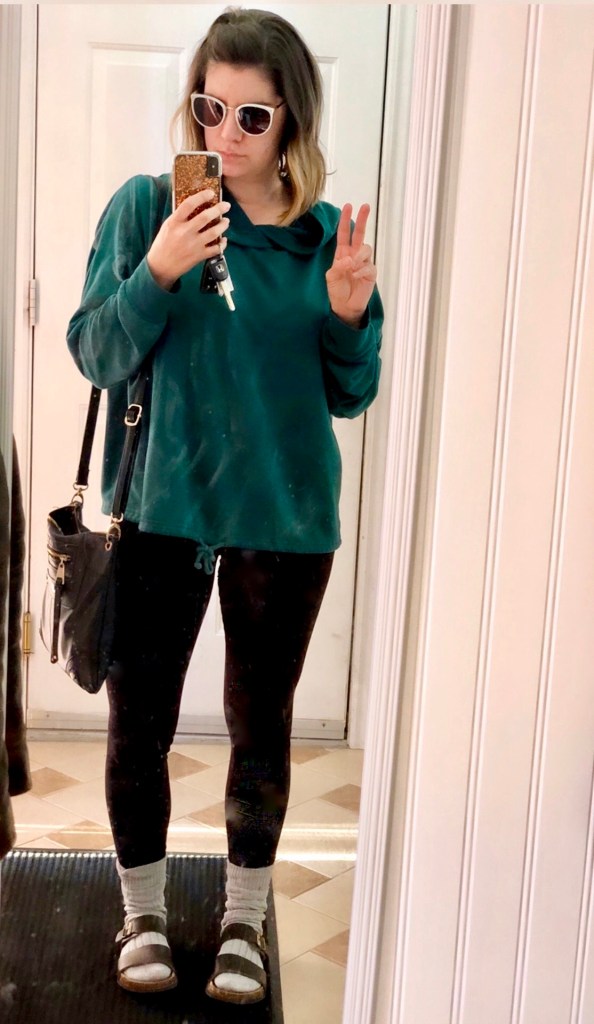
Desperate Housewives of Essex County: Corona Edition

Does this struggle resonate with you at all? If you can relate, PLEASE tell me! It’s nice to know I’m not alone in this burden of a fashionista.
As always, I’d love to hear from you! Thanks for reading along.

Breakfast of Champions: An Empty Stomach?

Confessions of an amateur intermittent faster

Starting each day with a whole lot of Jesus and a few cups of tea

Breakfast is the most important meal of the day!

– Lots of people (for a really long time)

I don’t know about you, but I’ve heard that my whole life. And for most of my life, I believed it!

Well Intermittent Fasting, by definition, requires you to cut out a meal and that meal is usually breakfast. So…

What is Intermittent Fasting, and why try it?

Intermittent Fasting isn’t really a diet plan, it’s more like a dietary pattern. Most diet plans focus on what you’re eating. They’ll often have a list of foods to avoid, and sometimes come with meal plans, or specific foods you’re encouraged to purchase directly from the company promoting the diet plan.

Intermittent Fasting on the other hand, focuses on WHEN you are eating, rather than what you’re eating. Of course, you’re encouraged to make healthy food choices. That should go without saying. But the important thing to focus on is that you are structuring your food intake within a smaller window of your day.

The idea is that by eating for fewer hours in a day, you’re decreasing your calorie intake without changing much about what you’re actually eating. Personally, it’s been the easiest “diet” I’ve ever been on.

Green smoothie bowl for lunch!

The 16/8 Schedule

The 16/8 schedule is probably the most common for Intermittent Fasting. The goal is to consume all your calories for a 24 hour period within 8 waking hours, and then fast for the remaining 16 hours of the day. So usually this means that your eating window is from 10 am to 6pm. Your fast would then begin at 6pm and go until the next morning at 10am when you break your fast for breakfast (see what I did there…).

The 12/12 Schedule

The 12/12 schedule is recommended for those who want to ease into intermittent fasting. The eating window is from 7am to 7pm, or whatever 12 hour period works for you. The idea is that you’re really just cutting out late night snacking/grazing/feasting which, let’s be real, isn’t doing us any favours in this corona quarantine season. So if you want to give it a go, this is the easiest way to dive in!

At least 50% of my lunches consist of chickpeas
and some kind of Epicure seasoning.

Can I consume anything during the fasting hours?

Yes ma’am! (or sir)… You can drink plenty of water. In fact, you should always drink plenty of water! But don’t take my word for it because I really suck at this. Adding some ice and lemon to my water does help me drink more. So I recommend trying that if you need a little boost.

In addition to water, you can drink coffee or tea. I’ve also read that if you drink something with less than 50 calories in it, your body will remain in a fasted state. So I personally enjoy my morning tea with a splash of almond creamer because frankly, I love myself enough to add the creamer.

A couple of morning tea drinkers joining the club!
(Relax y’all, they still eat breakfast)

Will I miss breakfast?

Honestly, I can’t answer that for you. All I know is that I couldn’t believe how easy it was to give it up. Although I’ve never had an appetite for big breakfasts of eggs, bacon, waffles, etc., I could never imagine starting my day without a bowl of cereal. I just couldn’t be awake past 9am without having at least a small bowl with almond milk.

If you prefer to wean yourself off breakfast slowly, start by eating smaller and smaller portions at a later and later time, while also increasing your water intake.

Most days, I try to consume nothing until I actually feel a pang of hunger. And I’m still surprised that I rarely feel hungry at all prior to about 11:30am. When that happens, I drink a glass of water or a cup of tea. If I am still hungry after that, I’ll drink more water or more tea. Both of these (and coffee) count towards a state of fasting.

My eating window is usually from 12 or 1pm, and ends at about 7pm. So my hours of fasting are between 17-18 hours per day bringing the ratio to about 17/7.

It is recommended that for intermittent fasting to be effective, the hours of fasting should be at least 14 hours in a 24 hour period.

A winning combo for morning tea! The real breakfast of champions.

What I love about Intermittent Fasting

  • The non-restrictive approach to what you are eating.
    Eat what you want, people! I’m not here to judge you. Of course, if you actually want lose a bunch of weight or gain muscle or see any real change in your body, then I guess eat a vegetable once in awhile. But that’s just not what this is about.
  • Not being tempted to eat outside of the designated eating hours.
    This may be different for you, but I have always had such a hard time with evening snacking. I would do a lot of emotional eating after my kids would go to bed. I felt like I had earned the snacks I would binge eat every night because my day was so hard. I was essentially rewarding myself for surviving the day. And on evenings when my husband was out of the house, I felt like my favourite snacks were a consolation for my loneliness.

This is not a healthy relationship with food! I was not eating because I was hungry. I was eating just, because…

With Intermittent Fasting, I finally found the strength to listen to my body and recognize that it isn’t actually hungry All. The. Time. Can you believe it? And when it isn’t hungry, it’s become easier to say: I just don’t eat during this time. So it’s no longer about how many calories a certain snack contains… or how many calories can I get away with… or where can I make up for this later…

I simply enjoy the food I want to enjoy during the eating window and then that’s it, the kitchen’s closed. Come back tomorrow!

If I feel like a snack after dinner, I still try to keep it within my eating window. This baby snuck in before the 7pm cutoff!
  • The earlier the fast, the longer you’ll last
    I don’t understand the science behind it, but every time I eat a meal later in the evening, my hunger pangs begin even earlier the next day. It doesn’t make sense, but it’s true.

    My husband and I enjoy a special meal he prepares every Sunday night. We wait until the kids are settled in bed before sitting down for our date, so we don’t usually eat before 8 or 9pm. As a result, Monday mornings are inevitably my hungriest mornings. And I’ve found this to be true about any day following a later start to my fast the night before.

    So, the good news is that if you really stick to it, you’ll likely find it easier to cut out breakfast if you’re committed to not eating in the evenings!
Chef hubby making our late night, date night food

For the record…

I’ve lost some weight, and that’s wonderful. But the real upside to this lifestyle for me is the healthier relationship I have found with food in general. I didn’t expect that at all, and I’m grateful for it.

Skipping breakfast and not eating after dinner, have been easier to commit to because I am simply not hungry at those times. If I do happen to feel especially hungry earlier in the morning, I’ll eat lunch a little earlier. But there’s no mental guilt trip, or cheat days, or cheat meals that I have to work around. Simply listening to my body and making healthy choices.

I still love me some dark chocolate with a cappuccino in the afternoons when the baby’s napping. And I enjoy them both guilt-free. I think that balance has been really liberating in making it a lifestyle over diet fad.

My favourite dairy-free milk for very frothy cappuccino.
10/10 would recommend.

Have you tried or considered intermittent fasting?
Please share your experience and any tips, recipes, or questions.

I always love to hear from you!